
Hunter Hits
75
To celebrate the Hawker Hunter’s 75th anniversary, Hawker Hunter Aviation (HHA) undertook a commemorative flypast from its base at RAF Leeming. Chris Melaisi reports:
On July 20, 2026, Hawker Hunter Aviation (HHA) performed a commemorative flight around various locations in the UK to celebrate the 75th anniversary of the first flight of the Hawker Hunter prototype WB188 on July 20, 1951, flown by Hawker Chief Test Pilot Neville Duke from Boscombe Down.
More than 1,900 Hunters were built, serving with air arms around the world and remaining in frontline military service for decades. Today, the Hunter continues to demonstrate a simple principle: operational relevance is determined not by the age of an aircraft, but by the operational effect an intelligently upgraded platform can safely and credibly deliver. For HHA, its military-registered Hunters are the enabling platforms through which specialist military flight operations, airborne test and evaluation, defence trials and capability development are delivered for UK and international customers.
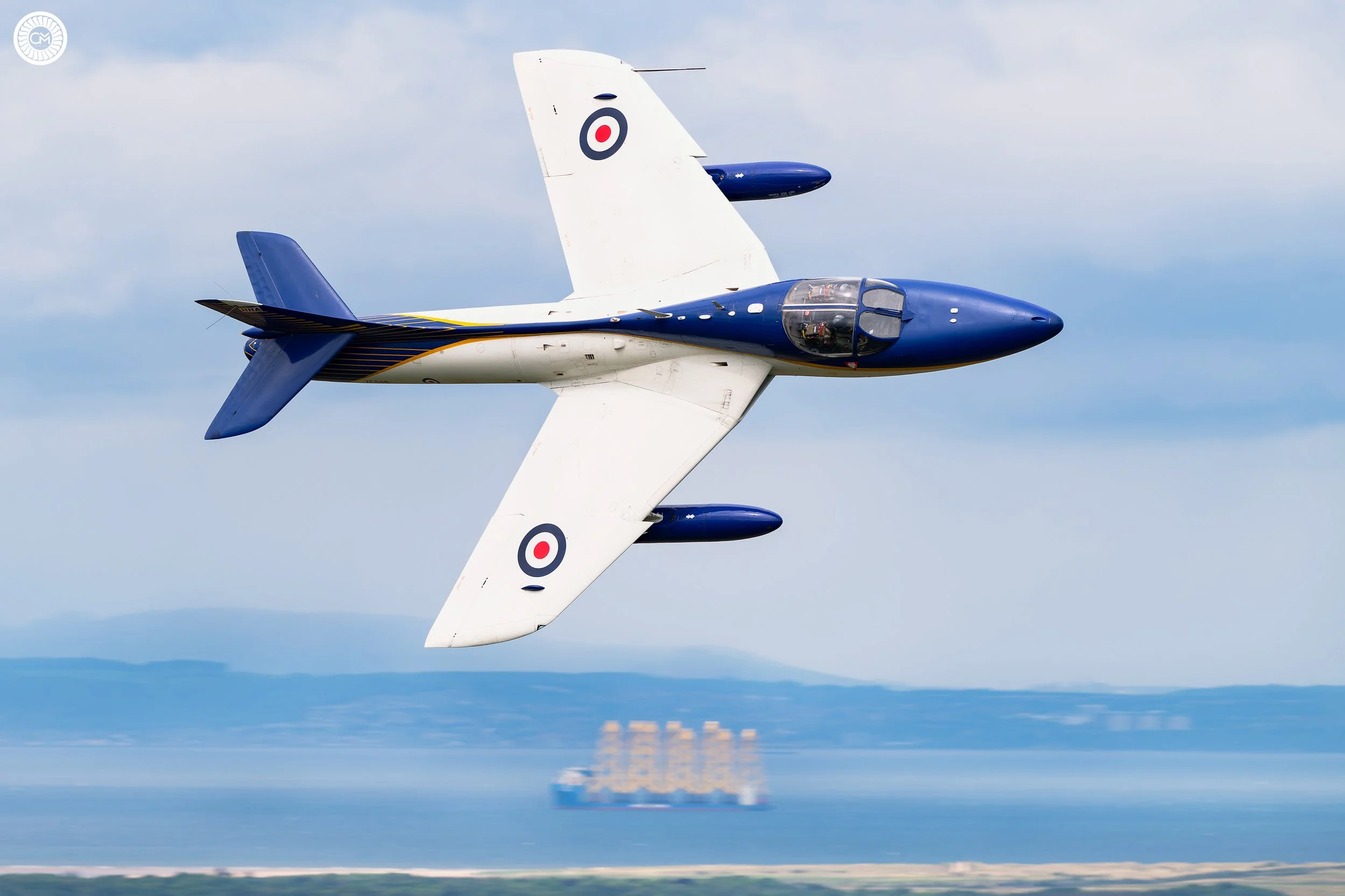
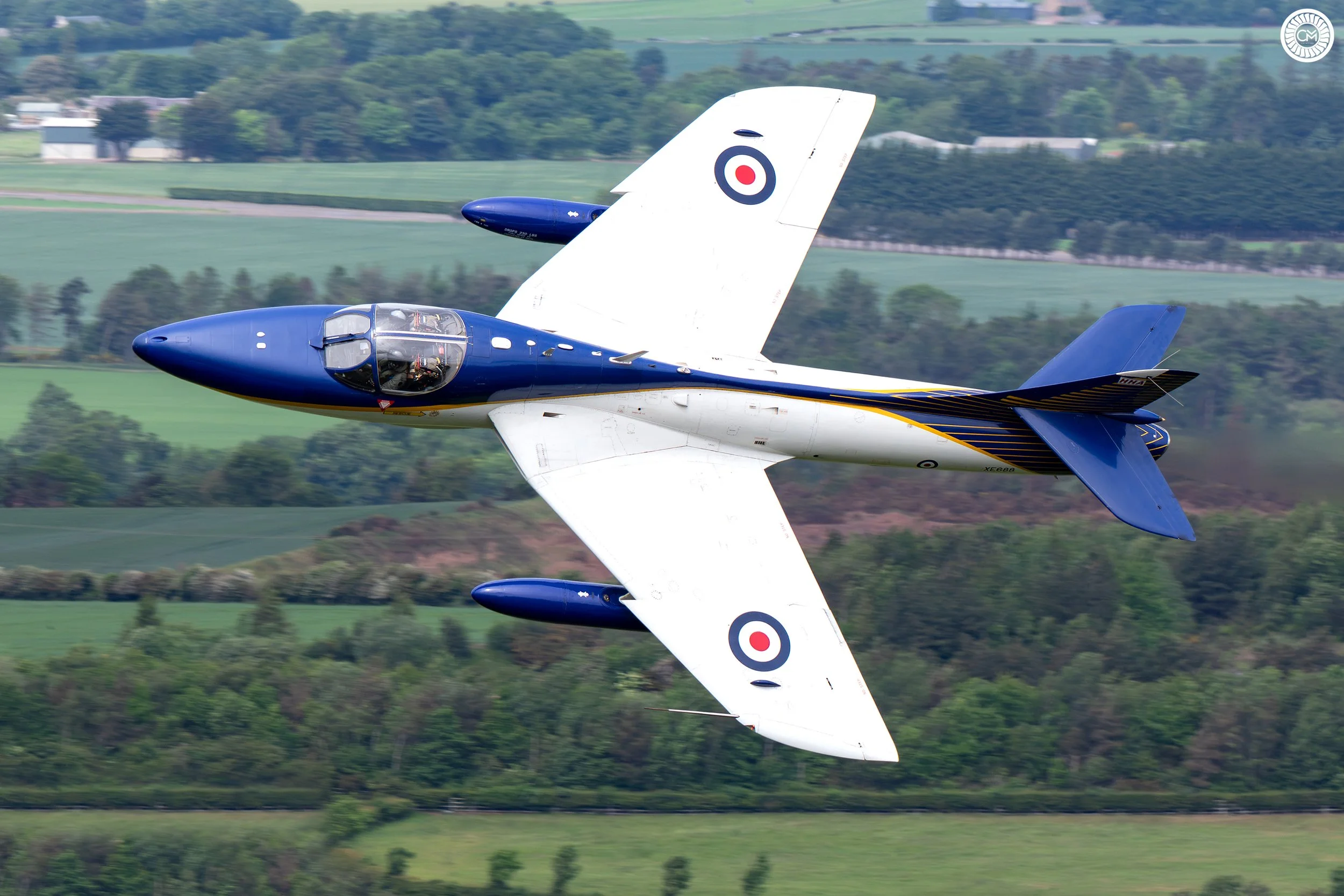
The commemorative flight was performed using the company’s two-seat Hawker Hunter T.72 XE688, crewed by Duncan Dean and Rick Offord. The Hunter departed HHA’s home base, RAF Leeming as ‘DUKE 75’ at roughly 1330hrs on July 20. The sortie saw the crew overfly MOD Boscombe Down, RAF Coningsby, RAF Marham and RAF Cranwell, before returning home to RAF Leeming at 1525hrs. Rick Offord explained that the original plan was to fly the commemorative sortie on the return to Leeming from the Royal International Air Tattoo at RAF Fairford. With the show being cancelled this year, he said “Doing the same to/from Leeming required some careful fuel planning. Luckily, the Hunter has myriad extra fuel options with various external tanks.”
The flypast was originally planned to involve a pair of Hunters, but this was reduced to one due to pilot unavailability. The priority was to overfly Boscombe Down, Rick explained: “We got there around 1410hrs. It is where Neville Duke flew the prototype exactly 75 years ago to the day, and Tangmere is where the prototype WB188 now resides in the museum.” Tangmere is also where Neville Duke broke the world airspeed record at 727mph on September 7, 1953. Rick said: “It seemed appropriate to fly the same course, albeit a smidge slower at roughly 300kt, our best range speed as we wanted to maintain fuel for the rest of the sortie.” When asked why the sortie visited the chosen locations, Rick explained: “As HHA continues to provide frontline support, it seemed fitting to fly through Marham and Coningsby on the return to our base at Leeming. As Cranwell – the home of the RAF – was also en route, they kindly allowed us to fly through. It made a busy sortie, especially negotiating the airspace around Gatwick, but it was a total honour to follow in the legendary footsteps of Neville Duke in the jet he developed into a world-beater and that is still fulfilling a vital role today.”
While acknowledging the aircraft’s remarkable history, the principal purpose of the event was to celebrate 75 years of continued operational relevance. At a time when increasing emphasis is being placed on defence capability, rapid experimentation and accelerated test and evaluation, the Hunter remains an excellent example of how a well-engineered legacy platform, intelligently upgraded and operated within a modern military regulatory framework can continue to deliver valuable operational effect. The commemorative sortie was the first Hunter anniversary flight to retrace key milestones in the aircraft’s development and operational history on the actual anniversary itself. In a statement, HHA said it “extends its thanks to Swanwick Military Air Traffic Control, the air traffic controllers at the participating airfields, and everyone whose support helped make the commemorative flight possible.’’