
Watching The Waves
Chris Melaisi spends time with the courageous ‘Tusker’ crews who cover Canada’s Northern territories, Eastern seaboard and beyond, and are on constant alert across land and water to save Canadians in distress:
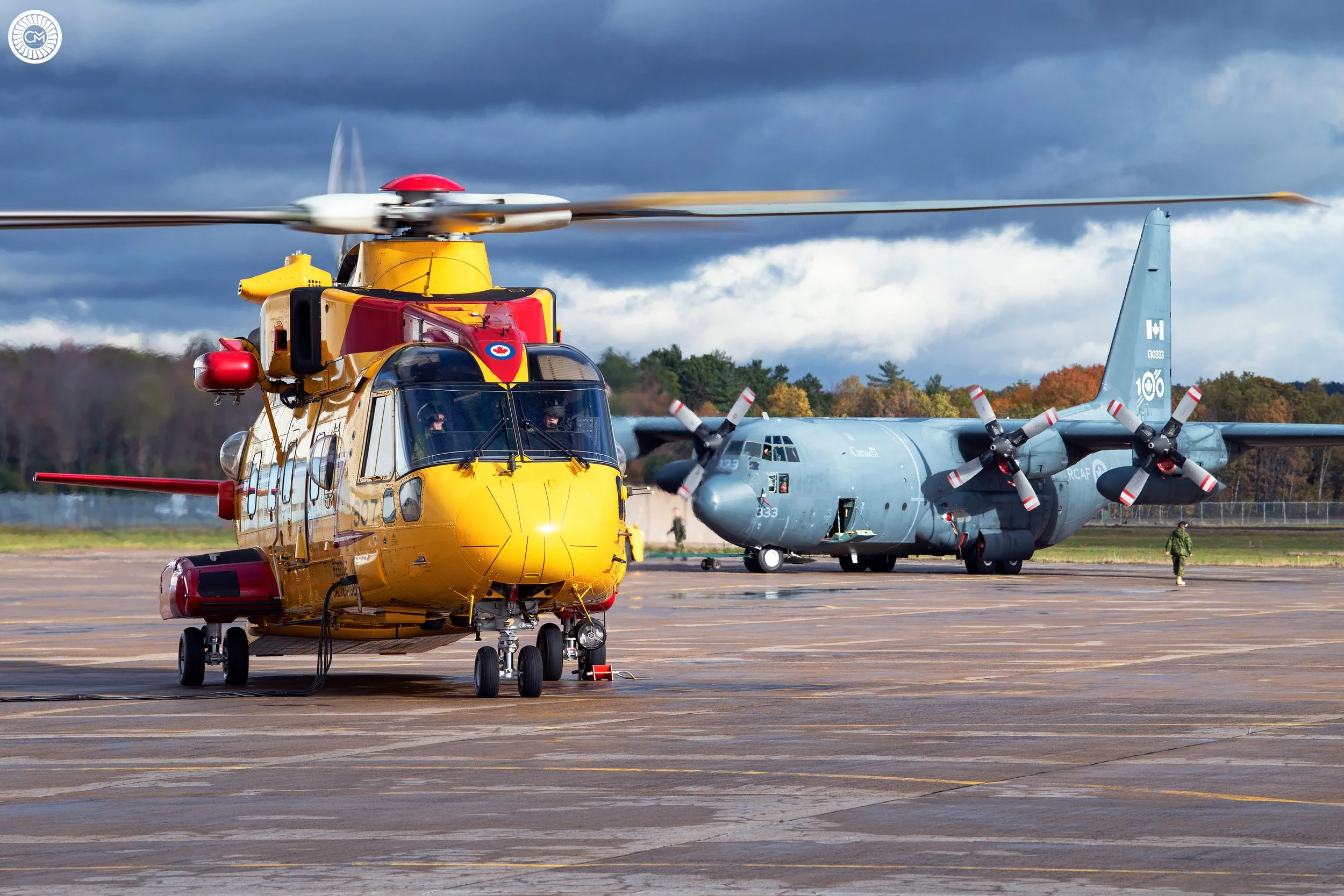
Situated on the country’s East Coast, Nova Scotia is home to Canadian Forces Base (CFB) Greenwood. Here, 14 Wing hosts one of the Royal Canadian Air Forces’ boldest squadrons. Operating through day and night, 365 days a year, 413 Transport and Rescue Squadron incorporates a fearless team, dedicated to saving lives through use of two formidable assets: the Lockheed CC-130H Hercules and the AgustaWestland CH-149 Cormorant.
History
Watching the waves for more than 80 years, 413 Squadron has served a multitude of duties throughout almost continuous service. Operations began in July 1941, when the first Canadian overseas flying boat unit was established at Stranraer, Scotland. In the early days, the newly formed unit flew the PBY Catalina Mk. I from Scotland’s southwest coast and latterly the Shetland Isles, tasked with general reconnaissance, convoy escort and anti-submarine patrols over the north Atlantic. Operations from Scotland ended in February 1942, as the squadron began to prepare for a hurried move to the Far East. It moved to Ceylon (modern day Sri Lanka), which was seen as a key link between East and West and under threat from Japanese naval forces. The squadron remained in Ceylon until early 1945, when it returned to the UK for what turned out to be a short-lived stint as a bomber unit. Post-war, the unit took over the duties of 13 (Photographic) Squadron at Rockcliffe, Ontario. The Royal Canadian Air Force (RCAF) was eager to re-implement its aerial mapping programme. Following the end of the war, particular attention was paid to the Canadian North and Artic regions, where accurate mapping was non-existent. Crews were initially assigned a mix of B-25 Mitchell and PBY-5A Canso aircraft, along with a single Noorduyn Norseman before finally receiving some re-purposed Lancasters. This enabled them to take full advantage of the Lancaster’s long range, to map most of the Canadian Arctic. Having gained experience working in extreme conditions of the far north, the unit participated in Operation Polco in 1950. Here, they were tasked to locate the north magnetic pole, which was critical information to enable accurate aerial navigation at the time. Following successful completion of the operation, the squadron was again disbanded. The squadron re-emerged as a frontline force on August 1, 1951 – a fighter squadron out of CFB Bagotville in the Quebec province. Equipped with the F-86 Sabre, it deployed in 1953 to Zweibrücken, Germany, as part of 3 Wing. The squadron was stood down on April 7, 1957 and reformed a month later back at Bagotville, operating the Avro CF-100 Canuck as an all-weather fighter unit as part of the NORAD shield. The squadron was again disbanded on December 30, 1961. It was then inactive for seven years before reactivation at CFB Summerside, Prince Edward Island on July 8, 1968, classed as a rescue squadron before being formally redesignated in August 1970 to the current function as 413 Transport and Rescue Squadron. In the same year, six CC-115 Buffalo aircraft were transferred from 429 Squadron to provide new search and rescue (SAR) capabilities. Three were sent to Summerside and the others to their west coast counterparts at CFB Comox. The increasing capability of helicopters had begun dominating the ‘rescue’ part of SAR operations from the mid-1960s, with the introduction of the CH-113 Labrador, mitigating the need for an amphibious fixed-wing aircraft. The 1989 federal budget cuts to the defence department identified CFB Summerside as a candidate for base closure. In 1991 it was closed and most military personnel transferred to CFB Greenwood. Summerside’s last operational unit, 413 Squadron, made the 270-mile journey south in June 1991 to form the current Greenwood squadron. The CC-115 Buffalo was replaced by the CC-130E/H Hercules shortly after 413 transferred to the new base. The CH-113A soldiered on until 2002 until the Agusta Westland AW101 was selected as the new rotary SAR platform and given the designation CH-149 Cormorant. The first Labrador replacement was handed over to 413 in August 2002, becoming today’s search and rescue fleet. On June 26, 2024, squadron members travelled back to their SAR proving grounds at Summerside to celebrate the 100th anniversary of the RCAF. Their CC-130H Hercules was joined by the Canso 702 PBY-5A for a static display demonstration for the local community.
Current operations
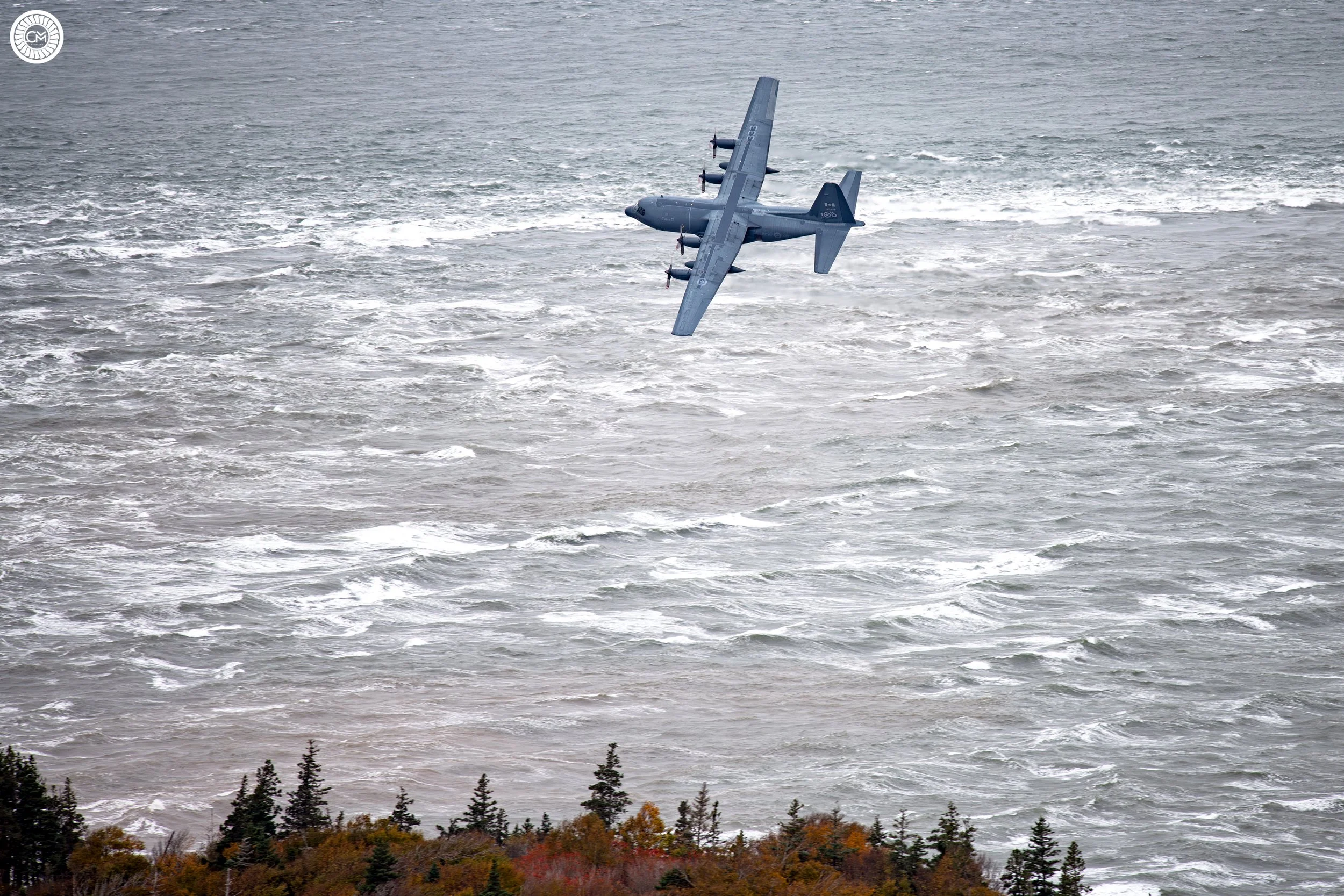
One of three RCAF ‘heavy’ search and rescue units, 413 Squadron’s counterparts are stationed at CFB Comox and CFB Trenton. The squadron manages both fixed-wing and rotary assets under ‘one roof’. This everyday interoperability makes it a unique for several reasons: Air forces don’t typically operate composite squadrons, mixing two different aircraft types –comparable units would be US Combat Search and Rescue (CSAR). Also, it’s a completely integrated unit; it delivers its own search and rescue technicians to facilitate rescue. Another factor which makes 413’s mission unique is the scale and vastness of Canada’s geography – the squadron has to be prepared for any scenario within its 1,800,000 square mile area of responsibility (AOR). The unit’s SAR roots are within the parachute rescue role; maximised by the Hercules’ strengths in speed, range and persistence to deliver two SAR technicians in parachute rescue. An array of heavy-duty equipment can also be paradropped from the ramp to those in need, whether that is kits to survive in the wilderness until rescue, or chainsaws to clear a landing zone for rotary colleagues. The ‘Cormorant’ contributes its own unique strings to the SAR bow through the hoist and the ability to land in confined spaces, which can enable access to the remotest of locations on land and at sea. The two-aircraft approach allows a unique take on SAR, with both aircraft responding to incidents and working together in a layered approach. The CC-130H is primarily used in the ‘search’ stage and further supports the Cormorant during ‘rescue’. The CC-130H provides an immediate response, being able to reach a scene expeditiously. On task, they conduct the search phase and establish communication with the party in distress, dropping any critical supplies. The Hercules will be an operations and communications platform to direct the rescue via Cormorant or other assets.
The squadron’s SAR function is managed by the Joint Rescue Co-ordination Centre (JRCC) in Halifax, which is operated by the RCAF and the Canadian Coast Guard (CCG). The squadron is obligated to have a Hercules and Cormorant on standby for JRCC tasking at any given time. The 413 Squadron Commanding Officer and Hercules pilot Lt Col Mark Norris explained: “The first step in enabling rescue is alerting, this can come in the form of a locator beacon being activated, which uses government satellites to collect information and distribute to SAR co-ordination centres. Other options would be to call 911, shooting a flare in distress or simply calling someone else for help, whether that be physically or using a mobile. “All these pathways would follow an escalation process until the situation reaches the JRCC. In Halifax, the tactical controller known as an SAR mission co-ordinator reviews the situation and, if deemed necessary, they would task an aircraft to respond. From the squadron’s perspective, we receive basic information at this point and begin preparation to launch. Our aim at this stage is controlled urgency, getting a plan together and under way as quickly as possible.”
The squadron regularly provides ‘Top-Cover’ for Canadian fighters transiting between Canada and Europe over the Atlantic, it also has historic ties to the NASA Space Program and provides standby cover during the Boeing and Space X launches from Cape Canaveral, Florida. Every launch of the crew vessel programme transit’s through the squadron’s AOR during the critical phase. An agreement is in place where aircraft are on standby to respond to an incident during this small timeframe. RCAF SAR technicians also head down to Florida to conduct physical training on the capsules as there are extremely toxic chemicals within them that require specialist recovery training. This operation is all part of supporting the US Air Force’s rescue package up the Eastern seaboard. As of October 2024, the squadron has rescued 71 people from a total of 150 SAR taskings in 2024. Lt Col Norris said: “One of the fundamentals in our work is that we’re an economic enabler. Being based on the Atlantic coast, we have a huge maritime workforce to oversee with oil and gas platforms offshore and a strong fishing industry within our AOR. Working alongside our sister squadron in Gander, we work to make sure these people can go out and perform their business safely every day.”
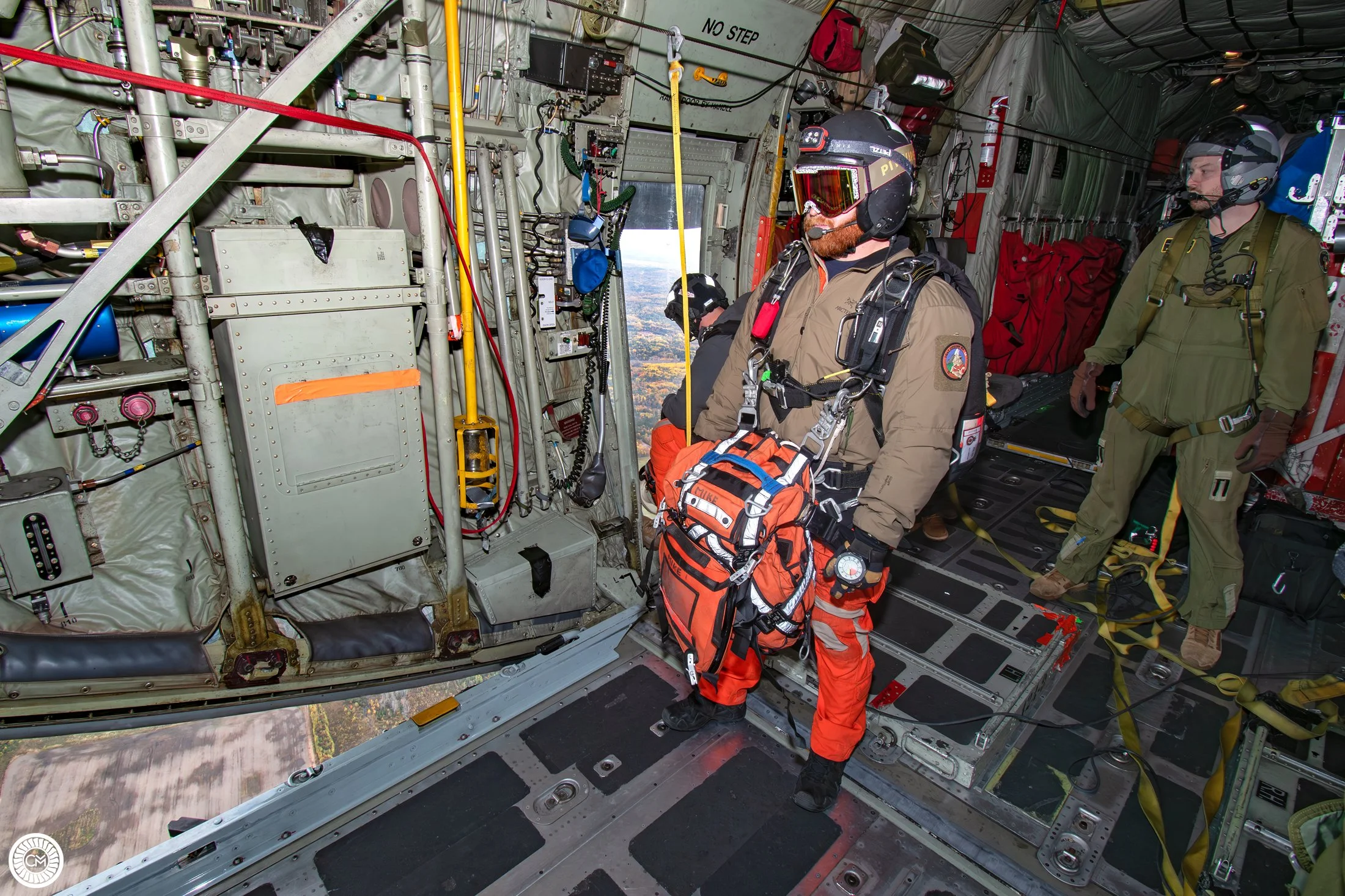
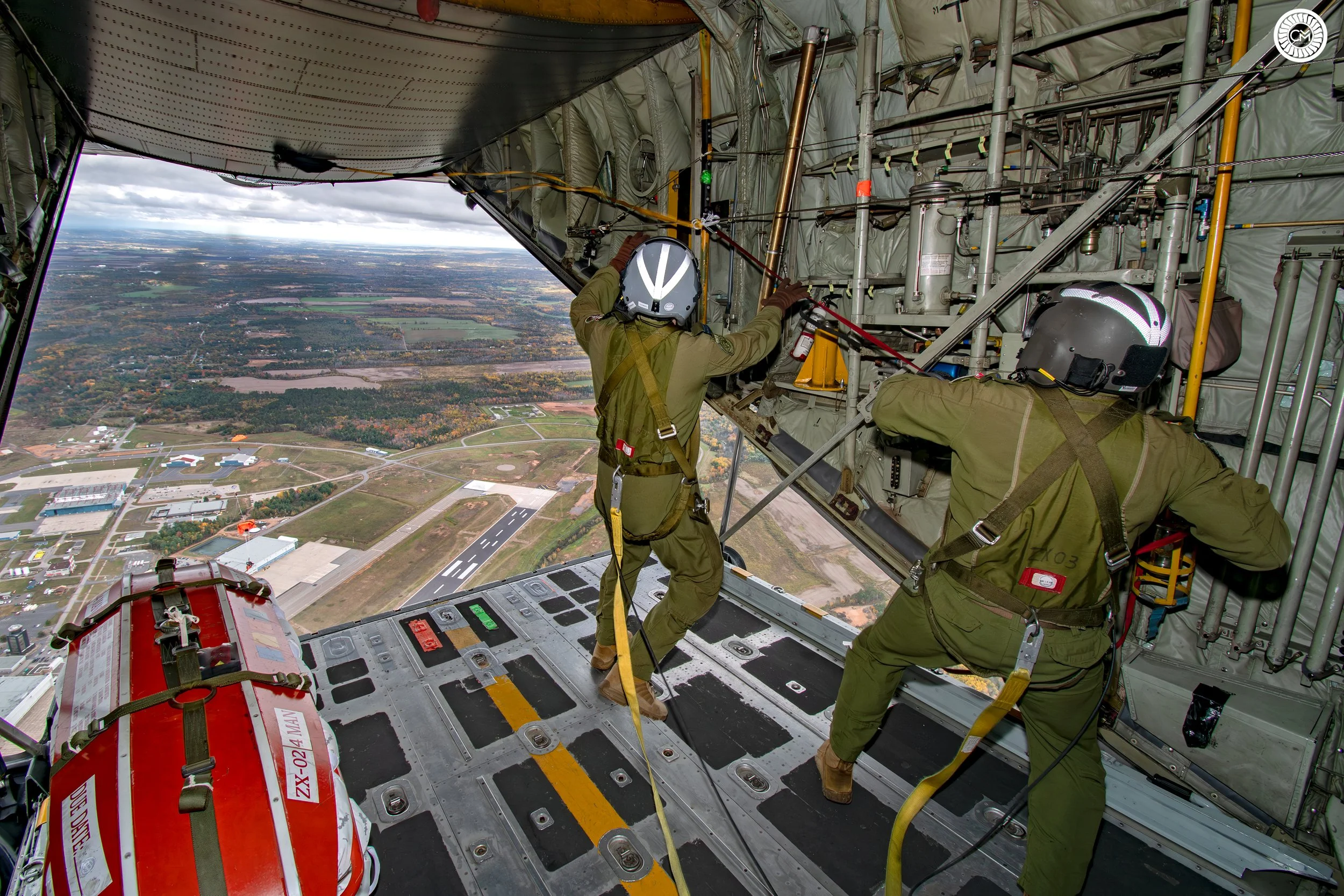
Continuous development: Every weekday, the squadron conducts a day and night-time training sortie enabling crews to gain hands-on experience. All aspects of SAR are covered with a mix of land and maritime sorties along with ‘remain overnight’ exercises where crews can venture further into the AOR to train in unfamiliar surroundings and terrains. Capt Aaron Noble, CH-149 Cormorant pilot, said: “We try to find unique situations that we have never come across before so we’re constantly building our abilities, whether that is a difficult hoisting operation or a new confined landing area. We frequently work with the local Coast Guard vessels, where we set up opportunities to conduct hoist training onto the ship deck. This tends to be most dynamic and challenging hoist operation to practice working with the moving target. However, it’s a vital skill given the likelihood of facing a real rescue of this nature.” Capt Ethan Williams, CC-130H Hercules pilot, added: “Alongside the Cormorant we work closely with the Coast Guard and will practice dropping water pumps or life rafts to vessels in daylight or with the aid of flares after dark. We also practice the same actions over land, typically utilising the Goose Bay Weapons Range for flare work, where we can also drop messages or radios at targets. Our aircraft commander will normally co-ordinate with the SAR technicians to understand their training or currency needs and devise a plan for that day or evening.” Every year, the unit sends members for survival training in the Arctic. The unit’s AOR extends north to Baffin Island, the most populated part of the Canadian Arctic. It’s an extreme environment, so is vital that members have a high level of exposure working in these areas. A recent tasking saw one CH-149 and CC-130H deploy to search for two missing persons in this area, with relief crews being required due to the long transit times to reach the northern tip of the AOR. Climate change is also making the environment more challenging and dangerous, with sea ice not forming as quickly or lasting as long. This is putting people at risk for longer. It’s overall a huge challenge, with its size and diversity and with poor weather, the squadron must be fully self-sufficient due to a lack of suitable aviation alternatives
In the back of a 413Sqn CC-130H (130333) as Hercules loadmaster’s assist SAR Technicians during a jump over CFB Greenwood.
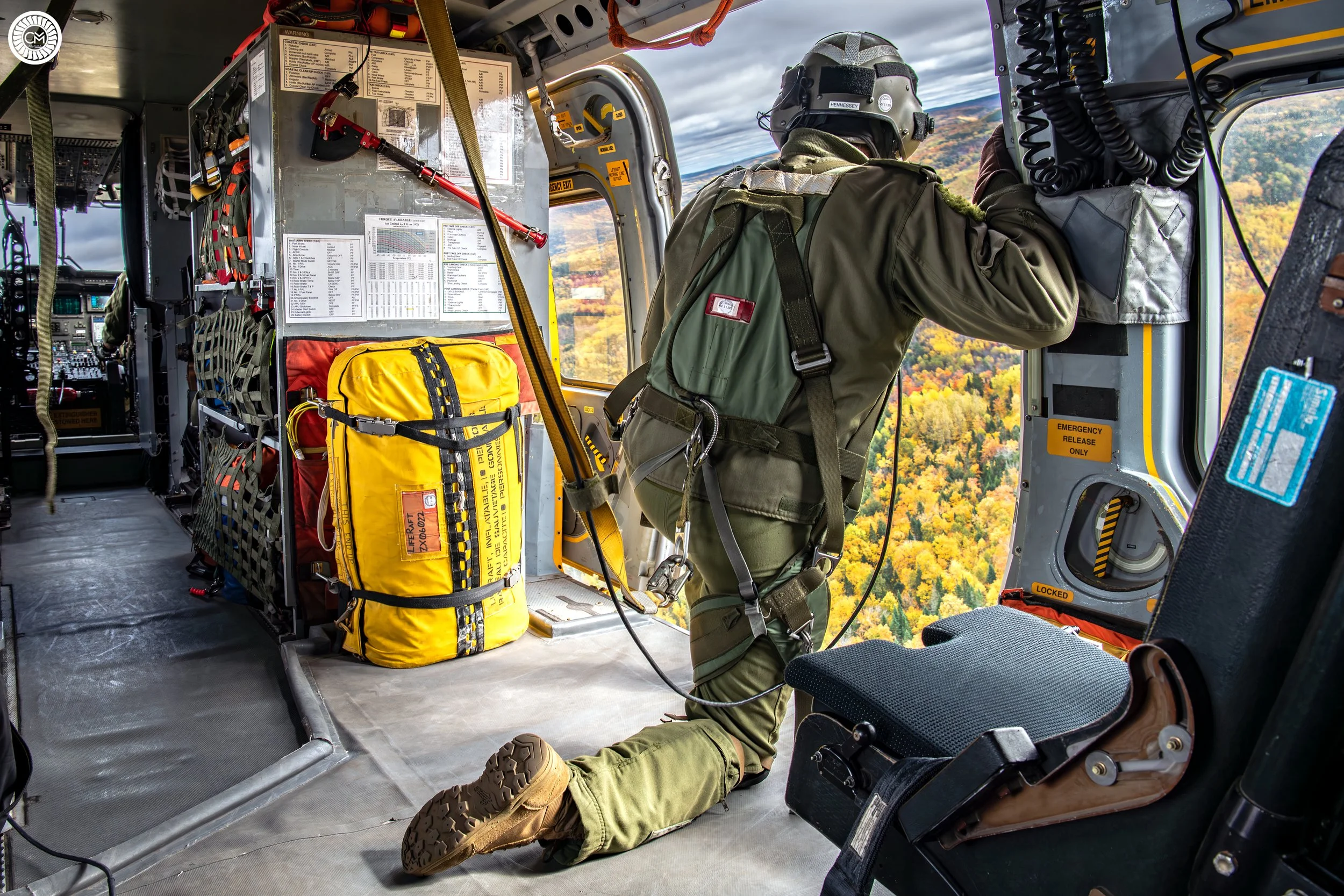
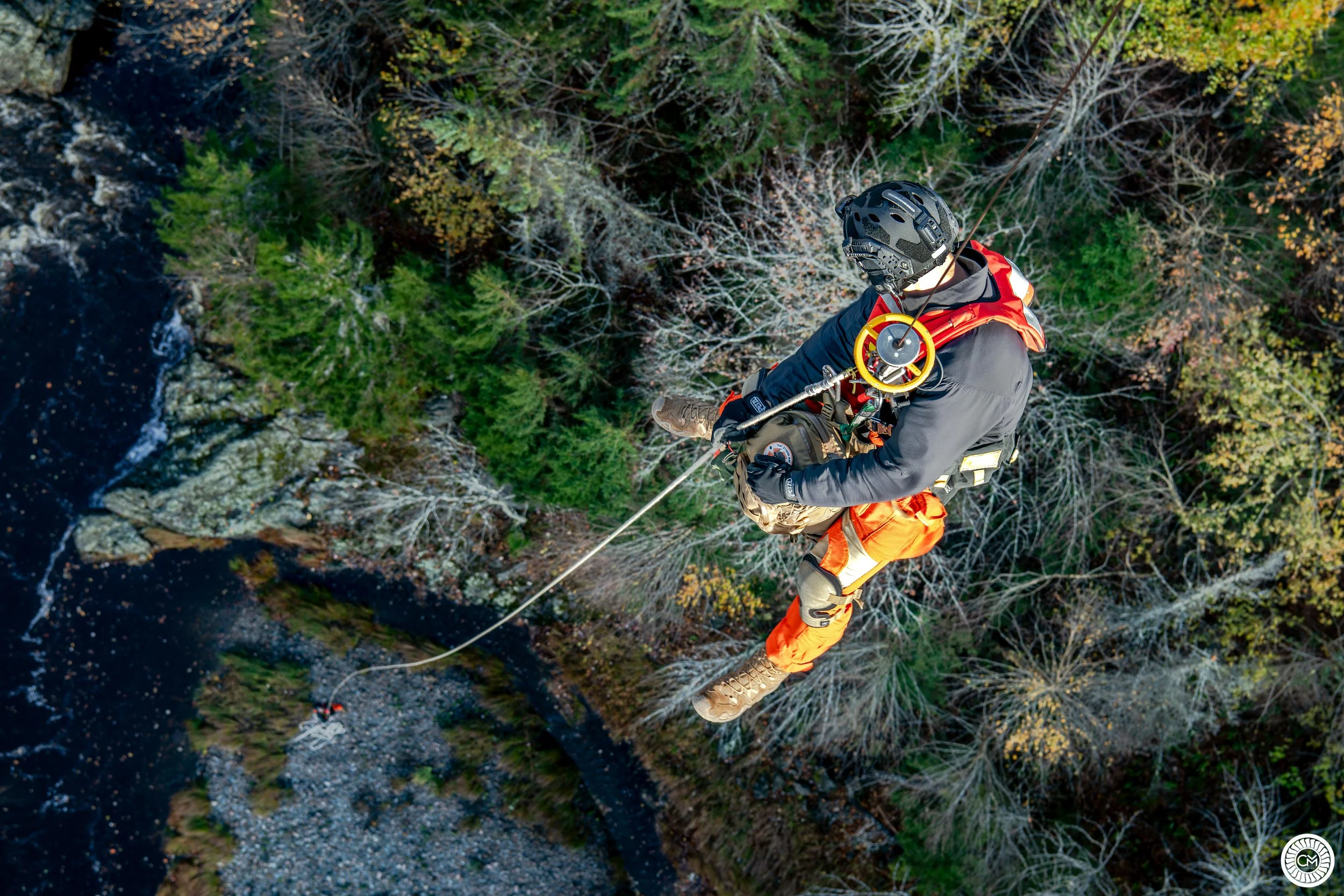
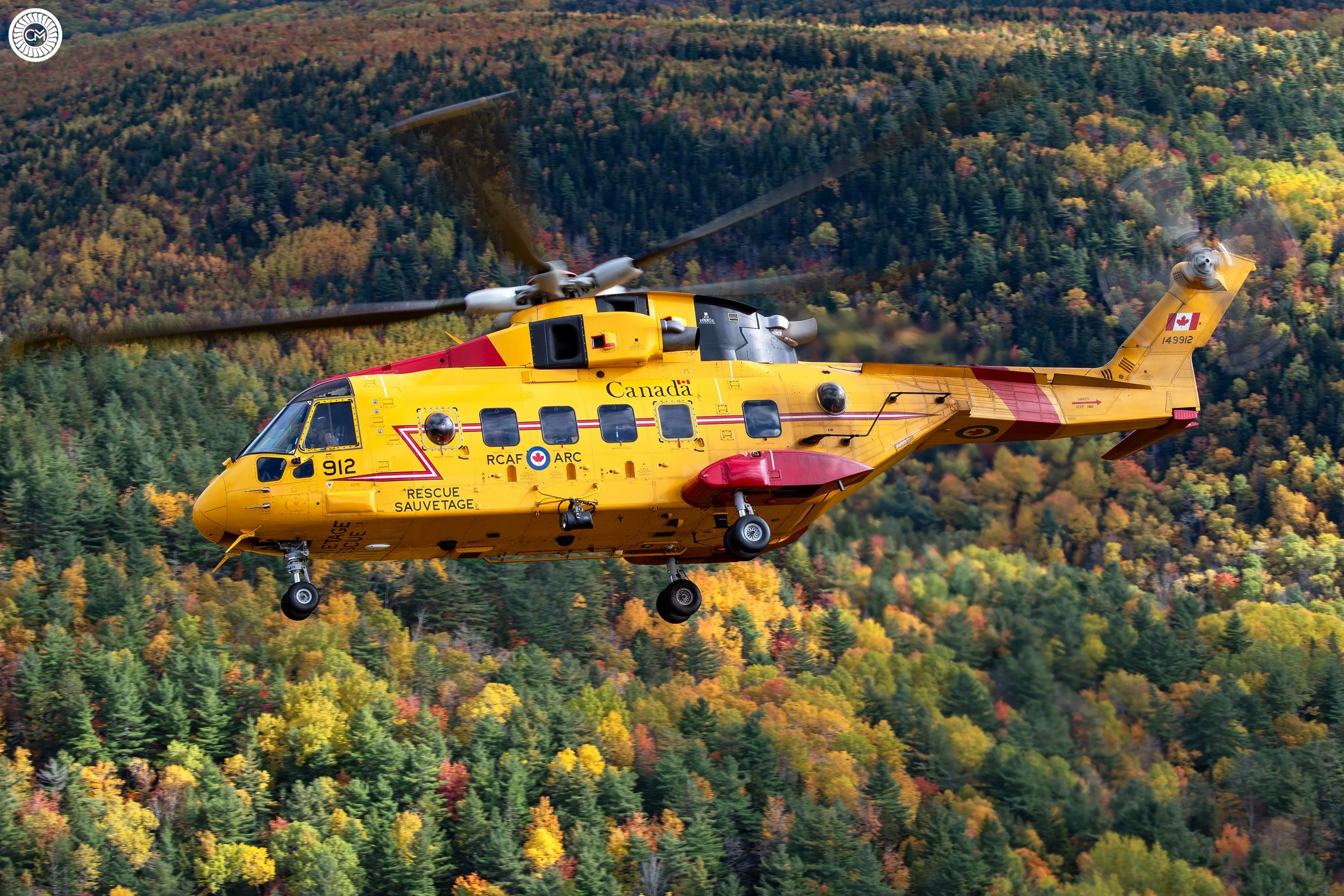
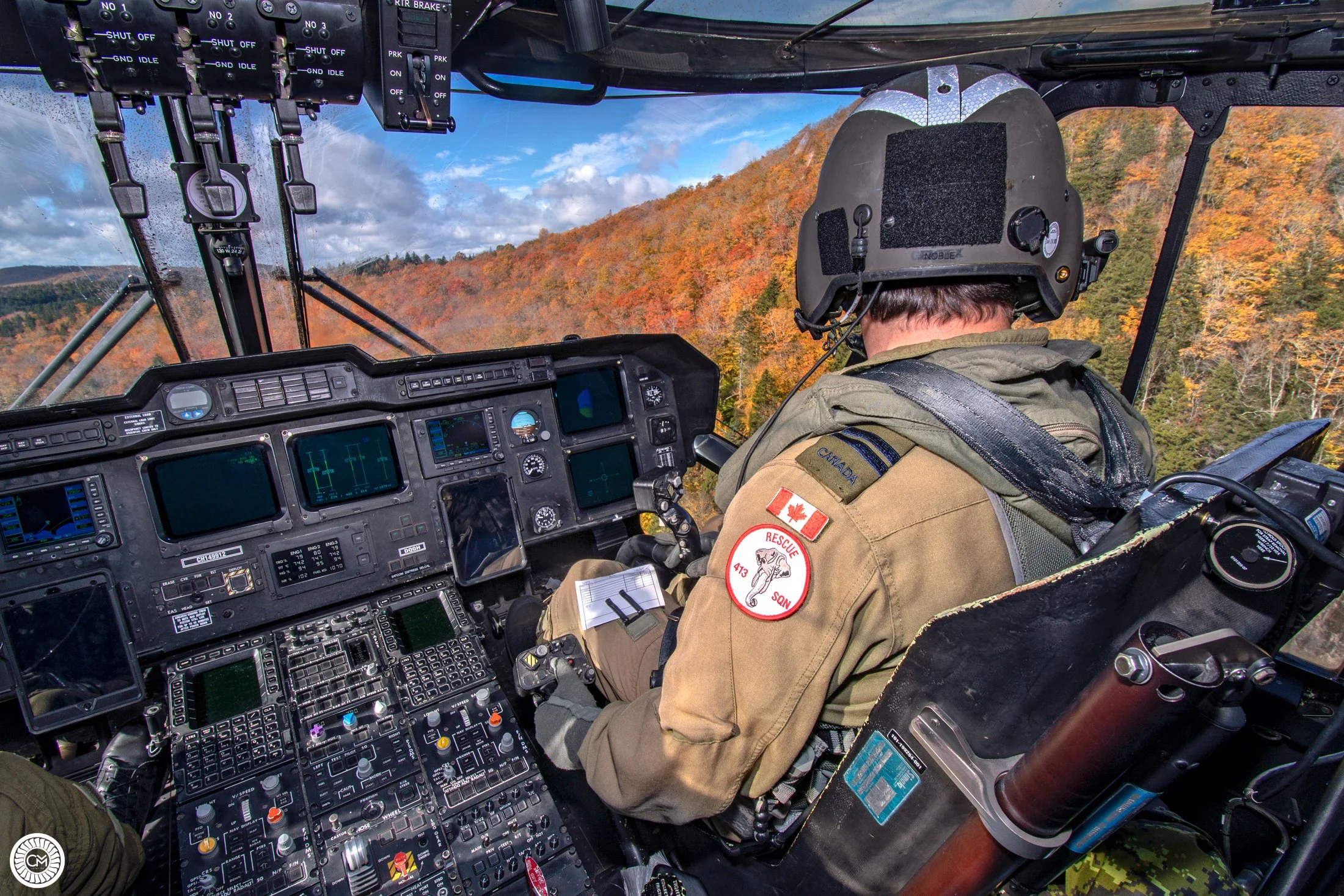
On-board 413Sqn CH-149 Cormorant ‘149912’ heading North West to a remote training location. Here, a SAR Technician was winched down into a narrow ravine, demonstrating the Squadron’s ability to deploy to various, hard-to-reach locations.
Role of the SAR technician: Search and rescue technicians are highly trained specialists who provide advanced pre-hospital medical care and rescue for those in distress in remote or hard-to-reach areas. These men and women are trained to a primary-care paramedic national standard with additional advanced skills. SAR technicians are land and sea survival experts who specialise in rescue techniques, including Arctic rescue, parachuting, diving, mountain climbing and helicopter rescue. The SAR tech role is not a direct entry trade – individuals must have served a minimum of four years in the regular forces or in the reserves, prior to applying for voluntary occupational transfer. The annual in-take will see applications ranked by suitability where only the top 30 are invited to attend selection. This involves aptitude and physical ability tests, followed by a land survival course at Jarvis Lake, Alberta. Approximately half of the initial group will be selected to attend the year-long SAR Tech RTM (restricted team member) course. Their training continues once posted to the squadron, with the goal of achieving a top-level qualification. In phases, RTM SAR Techs progress to an unrestricted team member, to conduct operational missions and, ultimately, the team leader course. The SAR technicians are backed up by ground-based personnel in the ‘SAR shop’, within the 413 hangar. The shop is effectively a warehouse-sized space, comprising all equipment that could possibly be needed for SAR – from parachutes to medicine and Arctic survival kits, to chain saws and scuba-diving equipment. Personnel based in the shop maintain equipment currency and ensure there’s always safe, fully operational gear ready.
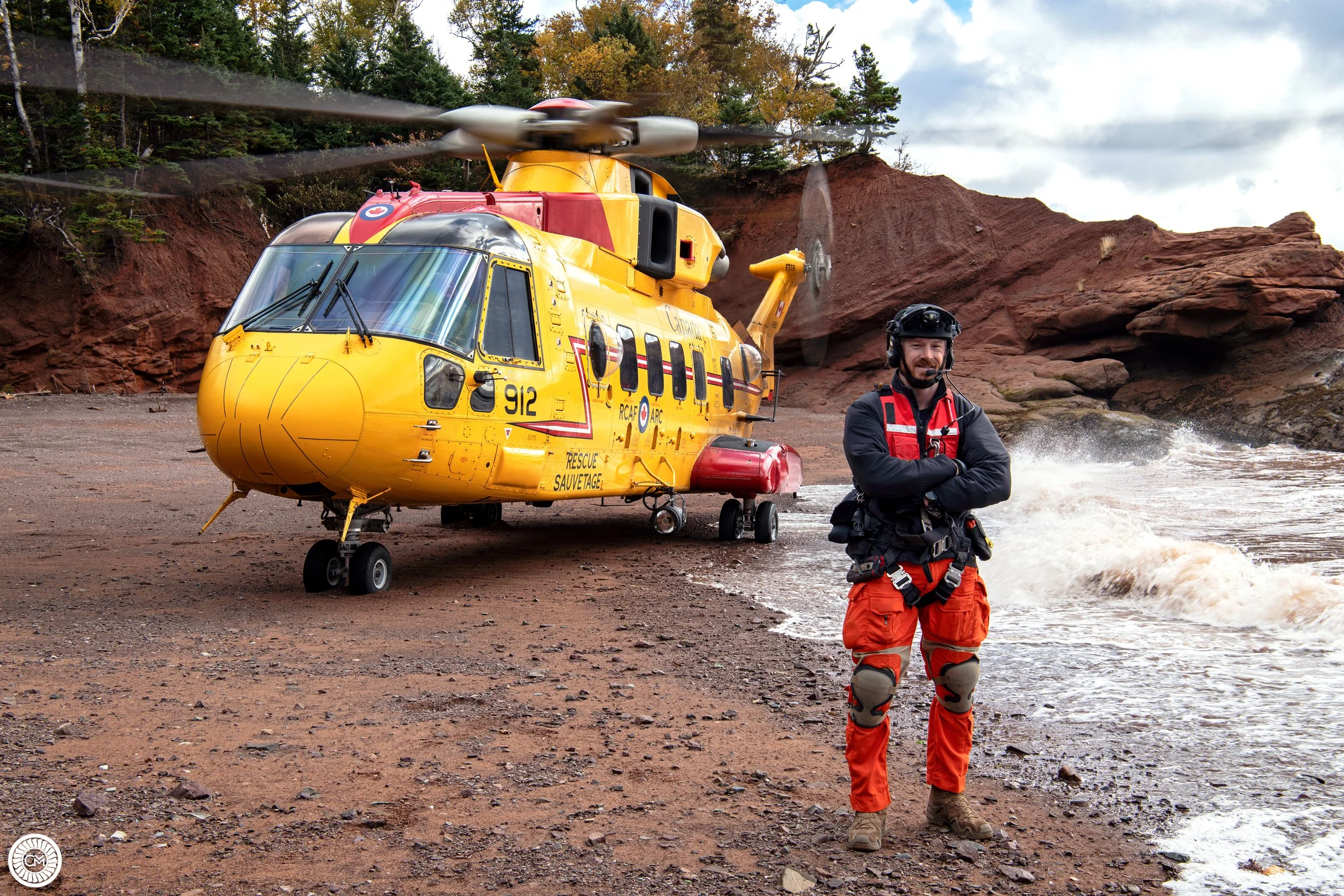
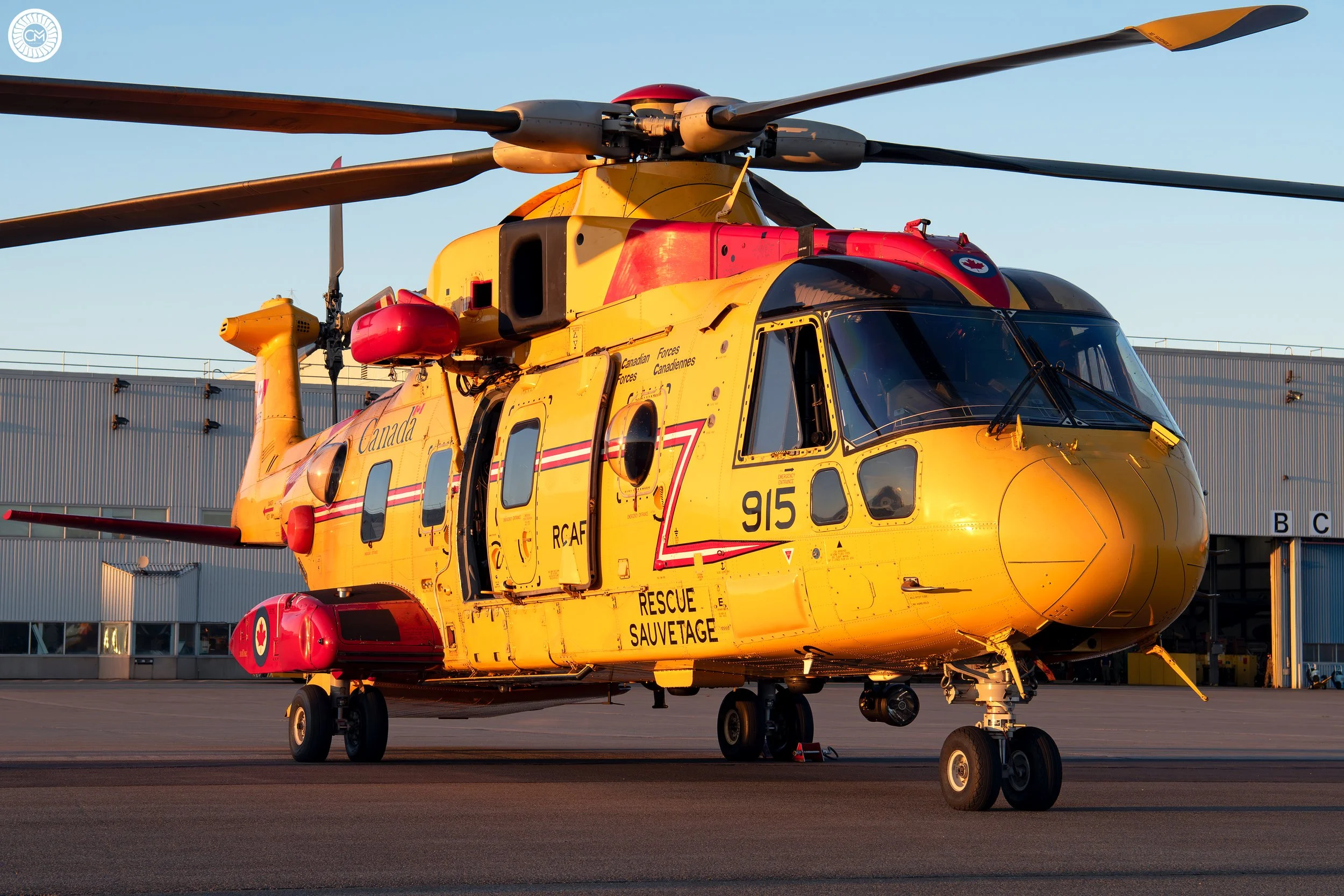
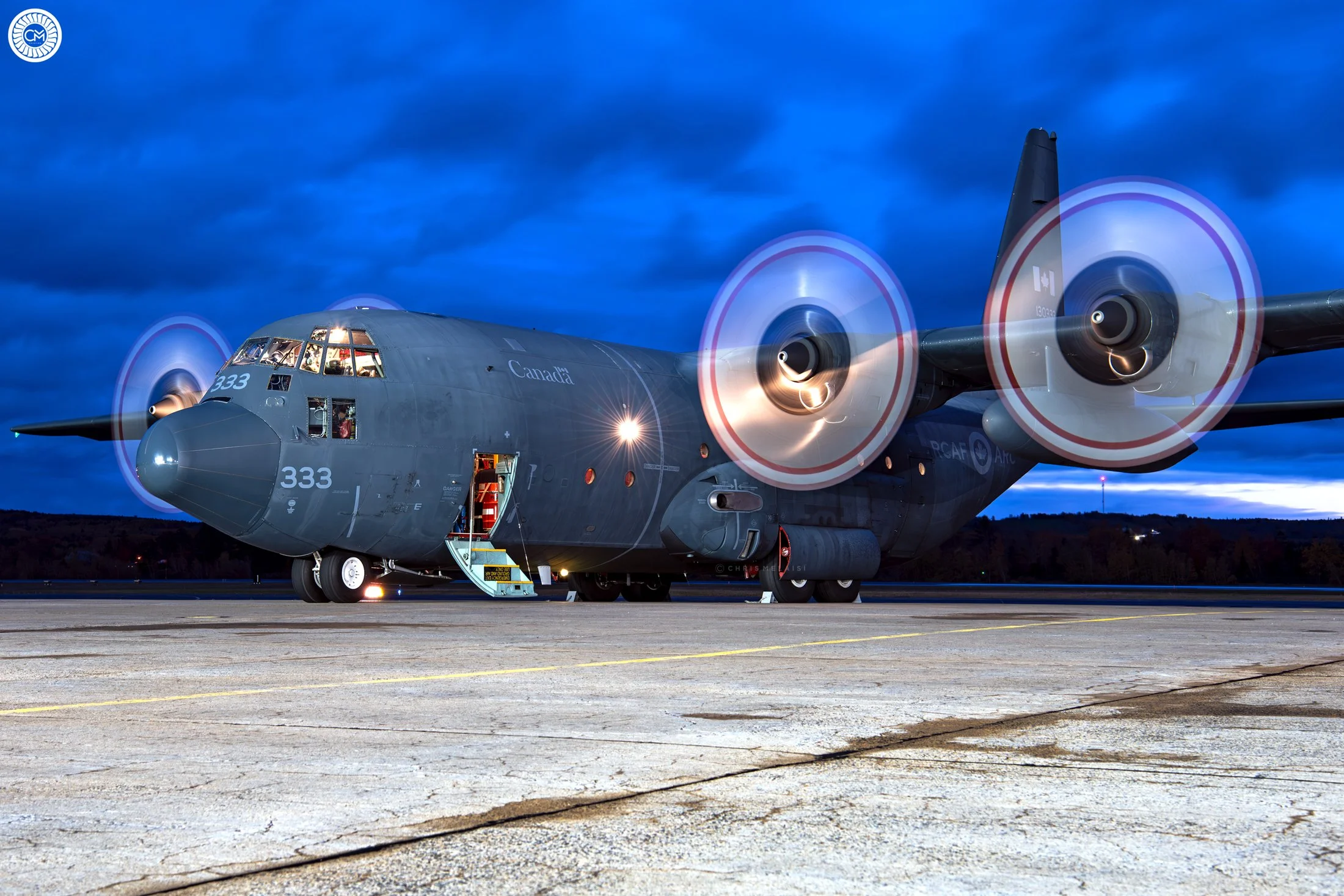
‘‘TUSKER333’’ is seen running at night, ahead of an evening training sortie around Nova Scotia, The CC-130H is due for retirement at Greenwood in 2026.
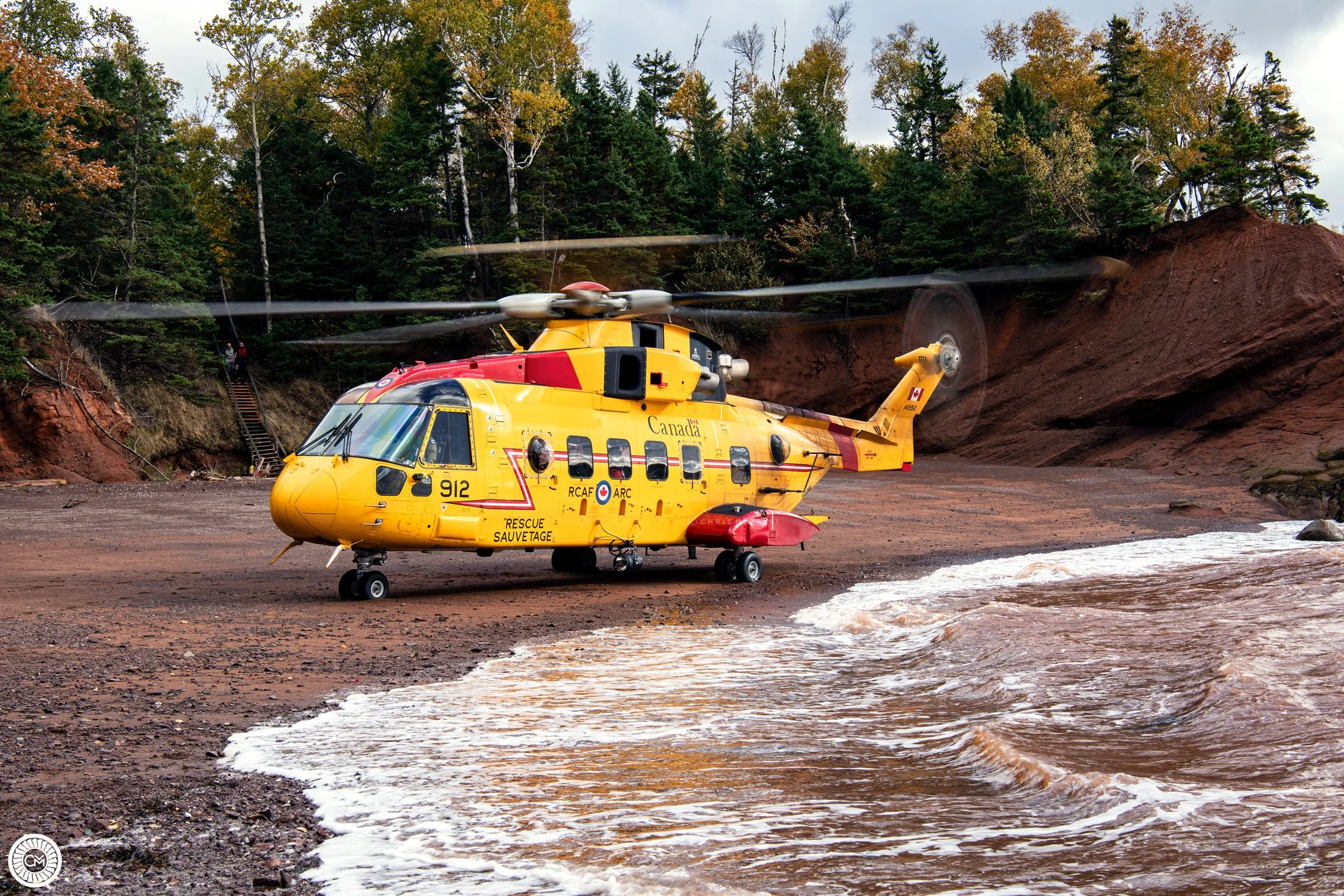
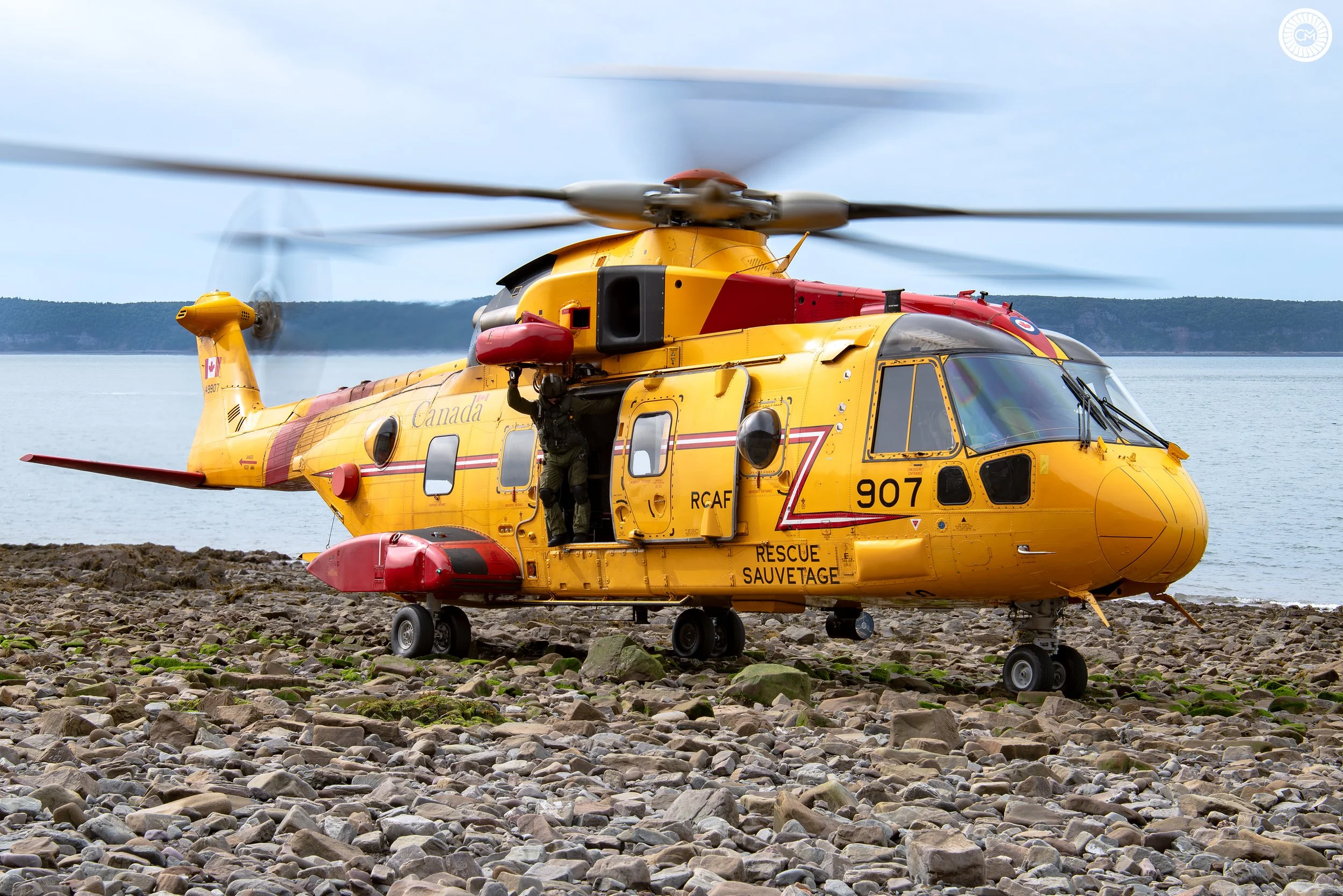
‘‘TUSKER912’’ - a 413 Squadron CH-149 is seen on the sand’s of a remote cove along Nova Scotia’s coastline. Landing in confined areas is an essential part of aircrew training.
Future of SAR at Greenwood
The RCAF is undergoing large-scale recapitalisation, with major changes to operate modern-only types. This transition will see the SAR squadrons evolve to operate new aircraft with increased capabilities and a centralised training platform. The air force has recently implemented new technology on board the legacy CC-130H, testament to its confidence in the iconic machine. Cellular airborne sensors for search and rescue (CASSAR) have been integrated to aid in the search for missing individuals. CASSAR equipped aircraft can identify and communicate with a search subject’s mobile phone, providing a precise location and enabling text or voice message to confirm condition and validate the level of distress, even in the absence of a cellular network. In practice, 413 Squadron was able to locate a missing vessel using the CASSAR system and communicate with the occupants within minutes of being in range, despite prevailing weather conditions that included thick fog. Despite the renewed interest in the type, the CC-295 Kingfisher will ultimately replace the Hercules as the next-generation fixed-wing platform; 413 Squadron is currently sending its SAR technicians to CFB Comox ahead of time to train on the new aircraft to keep their impact of being away to zero. The squadron is starting to transition maintenance and air crews to the new aircraft, aiming to be ready to hold primary SAR duty in 2026. Reminiscing on the Hercules’ incredible service and his personal experiences operating the type, 413 Sqn CO, Lt Col Mark Norris said: “Any transition is going to have its challenges. However, we remain positive and optimistic about receiving the Airbus CC-295 Kingfisher and we know it will be a great platform once fully integrated. It will complement the Cormorant well during all matters of tasking. “It’s been a huge privilege to be a C-130 squadron, especially as we are transitioning away from such a historical aircraft. It’s a legacy that we feel responsible for, and it will be a sad day when it eventually leaves our squadron. For now, though, they serve their purpose well and will soldier on serving our nation until the torch is passed to the CC-295.”
The CH-149 Cormorant has reached 20 years’ service and now needs modernisation with next-generation equipment. The Canadian Department of National Defence has awarded Leonardo a CAN$1bn (£559m) contract for the AW101/CH-149 “Cormorant Mid-Life Upgrade (CMLU) Project for 16 aircraft, comprising 13 existing Cormorant SAR helicopters currently in service and the augmentation of a further three aircraft. This contract will enhance the aircraft’s systems and technologies to a standard similar to the Norwegian Air Force AW-101 – arguably the best search and rescue helicopter in the world. The CMLU is expected to extend the life expectancy of the fleet to 2042+ with the airframes being returned with zero flight hours. Moreover, this project addresses the need for an improved training solution. By contracting CAE to provide a domestic flight simulator configured to modernised aircraft, Canadian aircrews will have dedicated training capacity at CFB Comox and will no longer need to travel to RAF Benson in Oxfordshire to train. The transition may be daunting for some. However, the renewed capabilities will equip the squadron with new methods of conducting SAR and keep them watching the waves for many years to come.
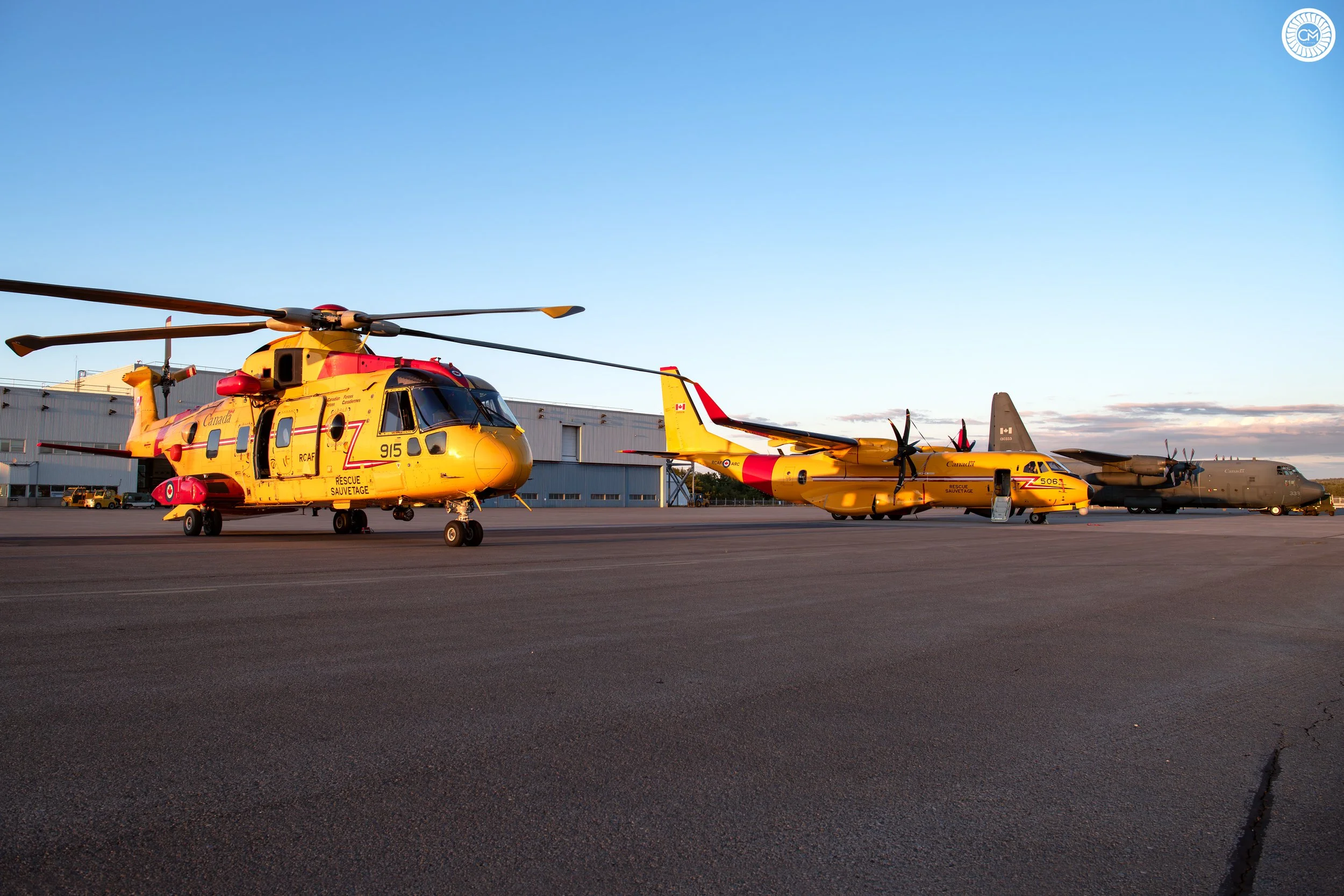
The Future of SAR at Greenwood - In August 2025, 413Sqn received its first CC-295 ‘Kingfisher’. Here all 3 413 assets are lined up awaiting duty.