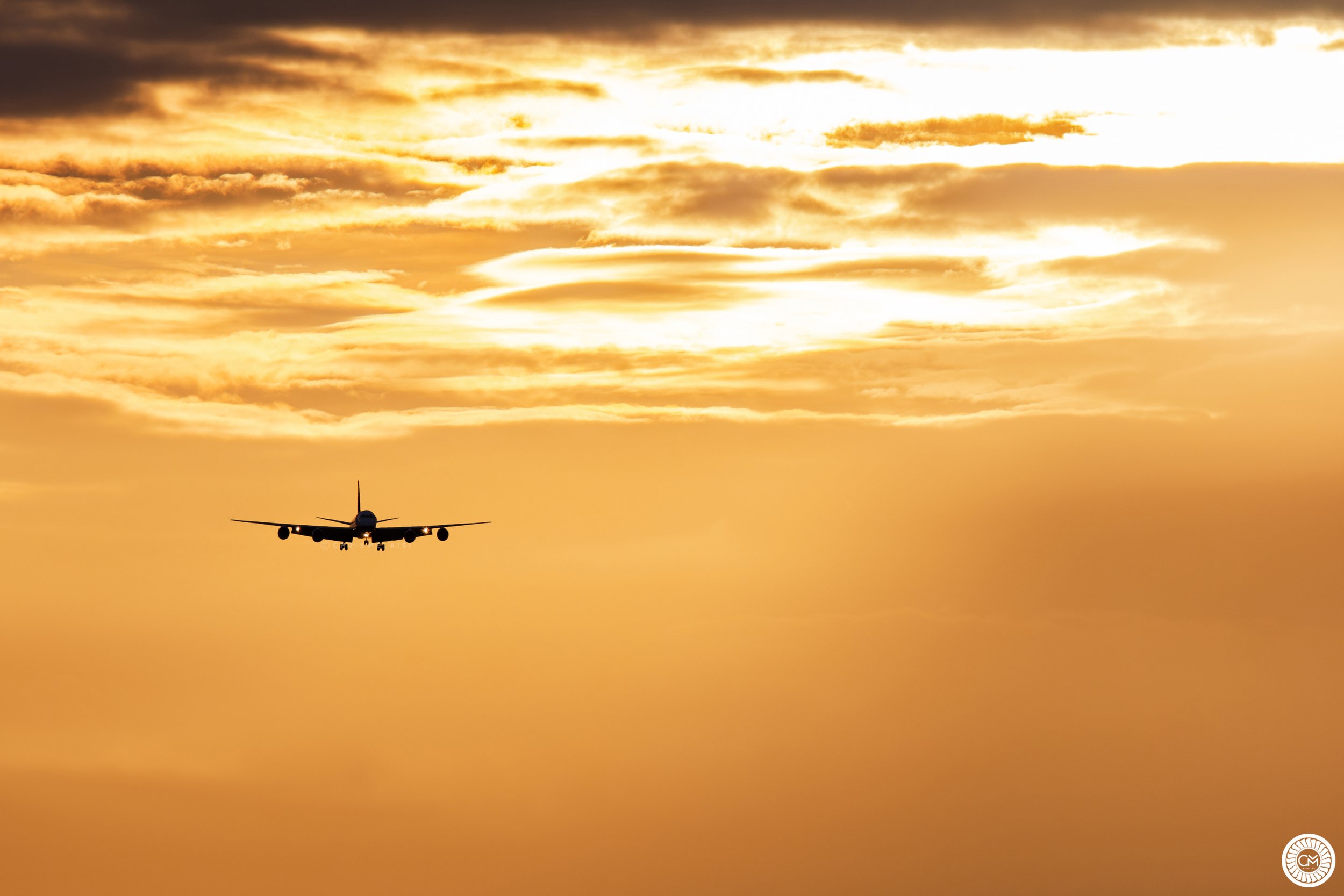
The ‘Almighty’ DC-8
Providing aid and disaster relief to millions around the World, Samaritan’s Purse work around the clock with their trusty Douglas DC-8-72 Combi to reach people in need at any given time. Chris Melaisi learns more about the organisation and the DC-8 before its upcoming retirement.
Samaritan’s Purse:
Founded in 1970, Samaritan’s Purseis an evangelical Christian humanitarian aid organisation that provides worldwide support to those in times of need. The organisation operates a varied fleet of rotary and fixed wing aircraft from locations across the globe, including the use of Turbo DC-3’s, C-212 and of course, one of the world’s last flying Douglas DC-8. The main aim of the Christian charity is to provide physical and spiritual aid in Jesus’ name no matter where that is required. In recent years, Samaritan’s Purse have travelled to all corners of the globe to provide this. From war-torn countries such as Ukraine, to conflicts in the Middle East and Africa, to natural disasters in South America and Asia, Samaritan’s Purse go where aid is needed most.
Greensboro Airlift Response
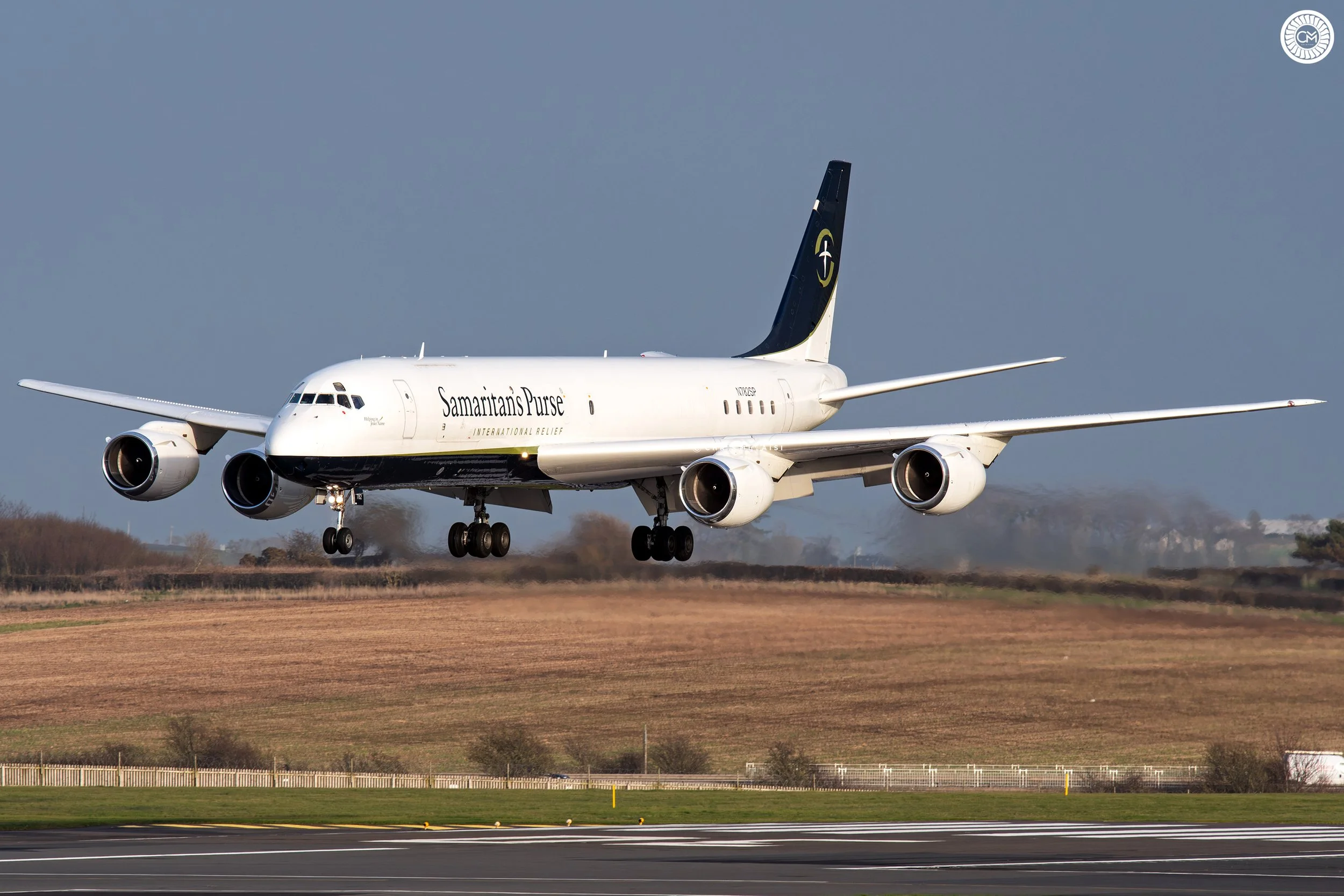
In 2015, Samaritan’s Purse acquired a Douglas DC-8-72(CF) which created huge opportunity in being able to provide short notice, global disaster response airlift missions. This was the ministry’s first heavy aircraft, enabling a game-changing mission, providing direct access from their mission aviation services base in Greensboro, North Carolina, to the world. After bringing the aircraft back online after a stint in the boneyard of Roswell, New Mexico, the FAA signed off on the aircraft and deemed it fit for service. Just 24 hours later, the mission aviation services team from Greensboro deployed to South America to provide aid to those in need from a recent destructive earthquake. For nearly a decade the DC-8 has been continually deployed around the world, mustering up 210 missions for Samaritan’s Purse and providing critical aid to millions.
The author speaks with Jim Vechery, director of aviation at Samaritan’s Purse, to learn more about mission preparation and the ‘heavy’ aircraft fleet based in North Carolina:
‘The mission of Samaritan’s Purse is to proclaim the gospel of Jesus, we do that by meeting people in their time of need, and when people are in need, speed matters. The aviation sector of Samaritan’s Purse allows us to get to people in crisis areas quickly and bring vital relief supplies to aid the physical need people have, which we can then back up by aiding their spiritual need, which is the reason we exist. We currently have 28 aircraft in our inventory, I oversee the heavy airlift operation here in Greensboro where 3 aircraft are based. We have 1x Boeing 757-200F, 1x 767-300F, which is new to the fleet and will act as the DC-8 replacement and of course, the mighty DC-8. Our focus is predominantly international disaster relief. We are called the Samaritan’s Purse airlift response centre as it’s our job to respond to crisis around the world. Our mandate here is to be airborne 24 hours from the time we receive a call from headquarters, who will inform us which location requires immediate aid. Our aircraft and aircrew must always be trained and ready, so that we can respond to whatever the mission is, as quickly as possible.’

Flight Mechanic Andy Farrell inspects the DC-8’s CFM56-2C engine on a pre-flight walkaround. The aircraft received the upgraded engines in 1981 when serving under the French Air Force.
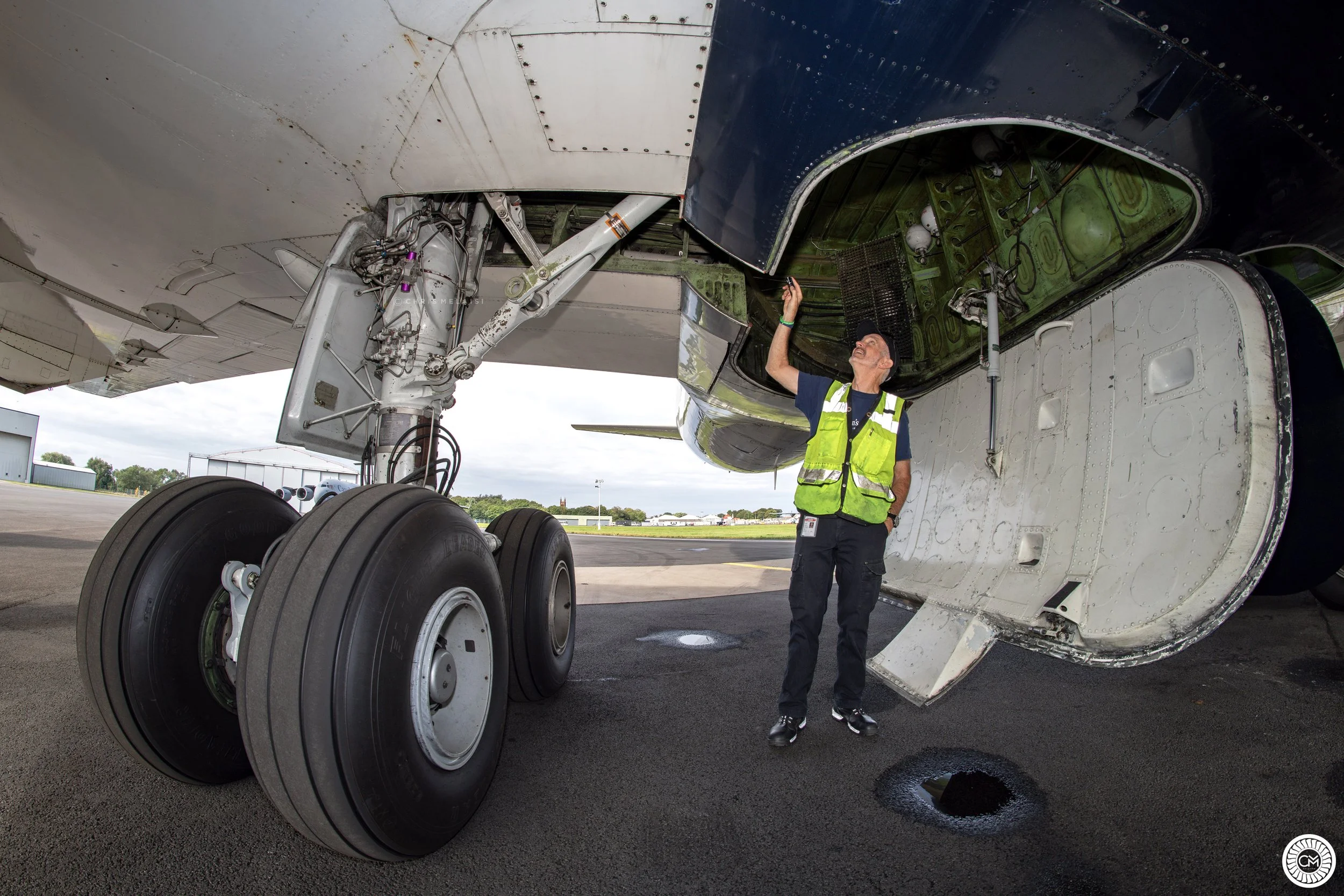
A unique view into N782SP’s main landing gear bay, as an inspection is carried out by the Flight Mechanic ahead of departure to North Carolina.
Mission Prep:
Mission preparation is vital when operating into potentially dangerous areas, it takes a mighty effort to prepare and transport thousands of pounds of vital aid with sometimes just 24 hours’ notice. Jim Vechery continues and describes how this is possible:
‘Preparing for a mission in a short space of time is challenging but very doable with the right people, resources and planning. The first step to consider is the location we will be flying to, and which aircraft is the most suitable for the mission. The biggest limiting factor is usually the country we are planning to visit. Gaining clearance to fly into and operate in that country’s airspace can be difficult, especially in times of conflict and getting all the necessary supplies to that country is another challenge. Thankfully, we plan for this and have a large warehouse where supplies are managed and can be loaded onto aircraft cargo pallets, ready to be transported by road to Greensboro at short notice. Each of our 18-wheeler trucks can hold 5 aircraft pallets, our DC-8 holds 10 of these, meaning with just two trucks we can transport a full cargo load which can be loaded straight onto the aircraft upon arrival at Greensboro. This saves vast amounts of time on the ramp. Once we have an approved flight plan, fuel and our cargo, the mission is relatively simple and that comes down to our seasoned and very experienced crews. They take the aircraft and fly it anywhere in the world where it’s required. For example, over the past year, we operated two flights into Vietnam, we provided Hurricane relief in the Caribbean and aid for an earthquake in Myanmar.
The cargo we carry to aid people in need ranges from medical supplies, shelters, Ready-to-Use Supplementary Food packets (RUSF), people and medical staff, sanitation kits and emergency field hospitals of which we have three different tiers, with tier 3 being the largest and most capable. To transport a tier 3 field hospital, it takes our aircraft 2-3 journey’s due to its sheer size and complexity but with our new Boeing 767F, we will be able to transport it in one go, saving huge amounts of time, which is vital when disaster and devastation has occurred in the area we’re visiting. As a Combi-aircraft, the DC-8 can transport up to 32 passengers as well as its cargo load, this comes in handy when transporting for example, a tier 1 field hospital, where doctors, nurses and the assembly team can travel with the cargo in one go. As much as this is advantageous on our missions, typically we require more people to travel via commercial aircraft to support the operation, so once the DC-8 retires, all supporting members will travel using commercial assets which won’t impact our response.’
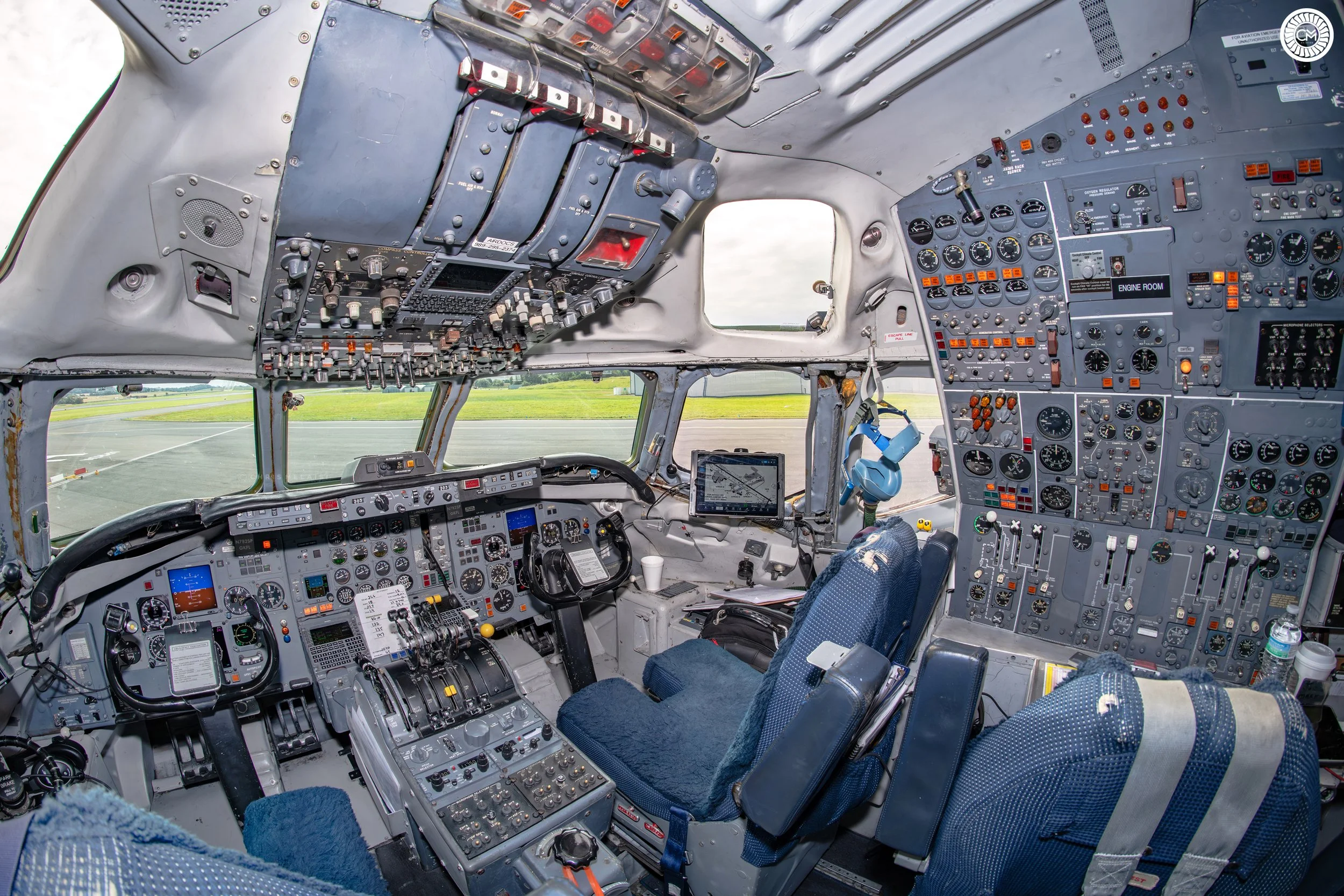
The DC-8’s impressive, three man-operated cockpit, with space for two pilots and the flight engineer. There is also a jump seat which is used as required.
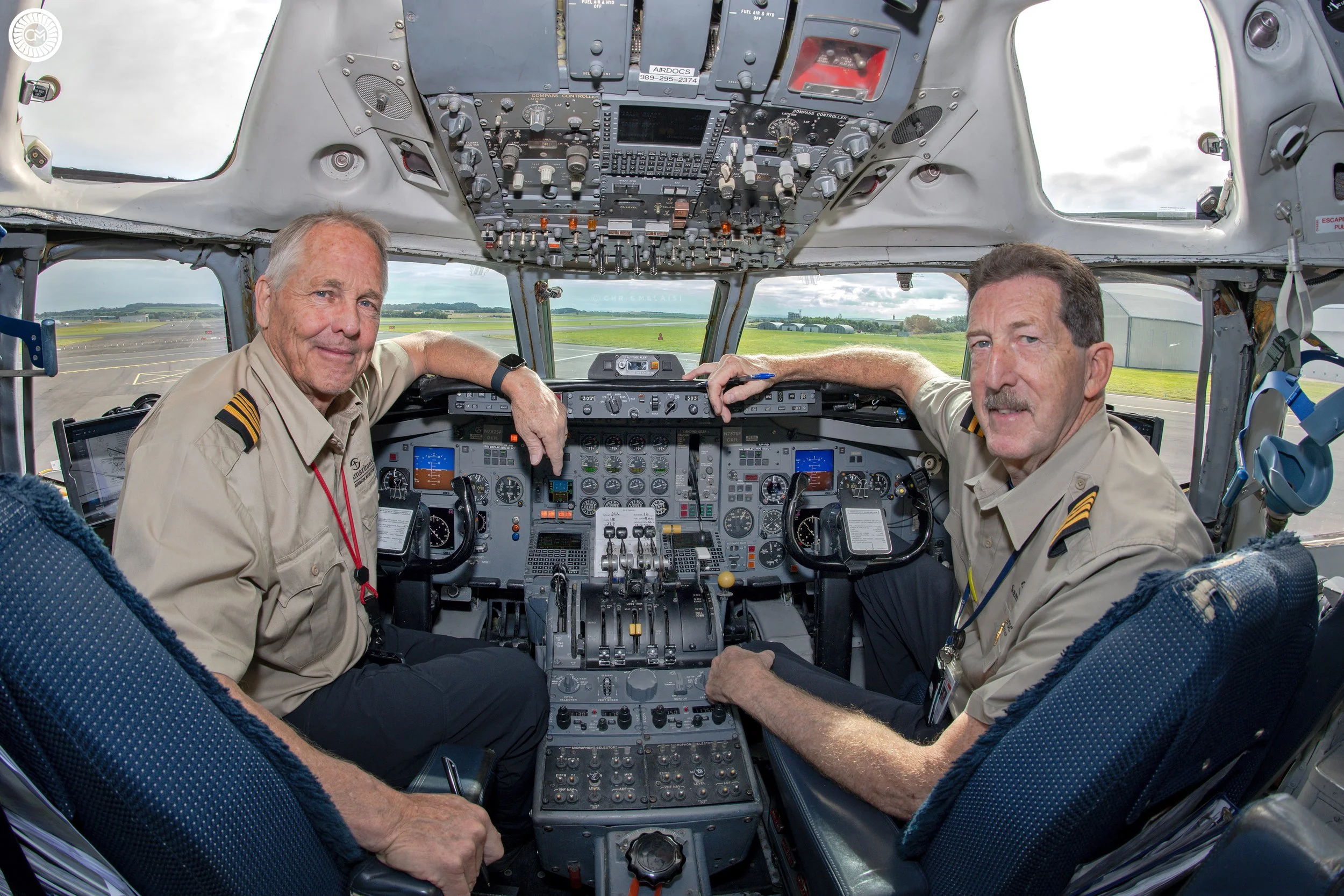
Seasoned, DC-8 veterans Ken Munn (left) and Andy Klischer (right) are seen at the controls, ready for another flight across the Atlantic to Greensboro.
N782SP
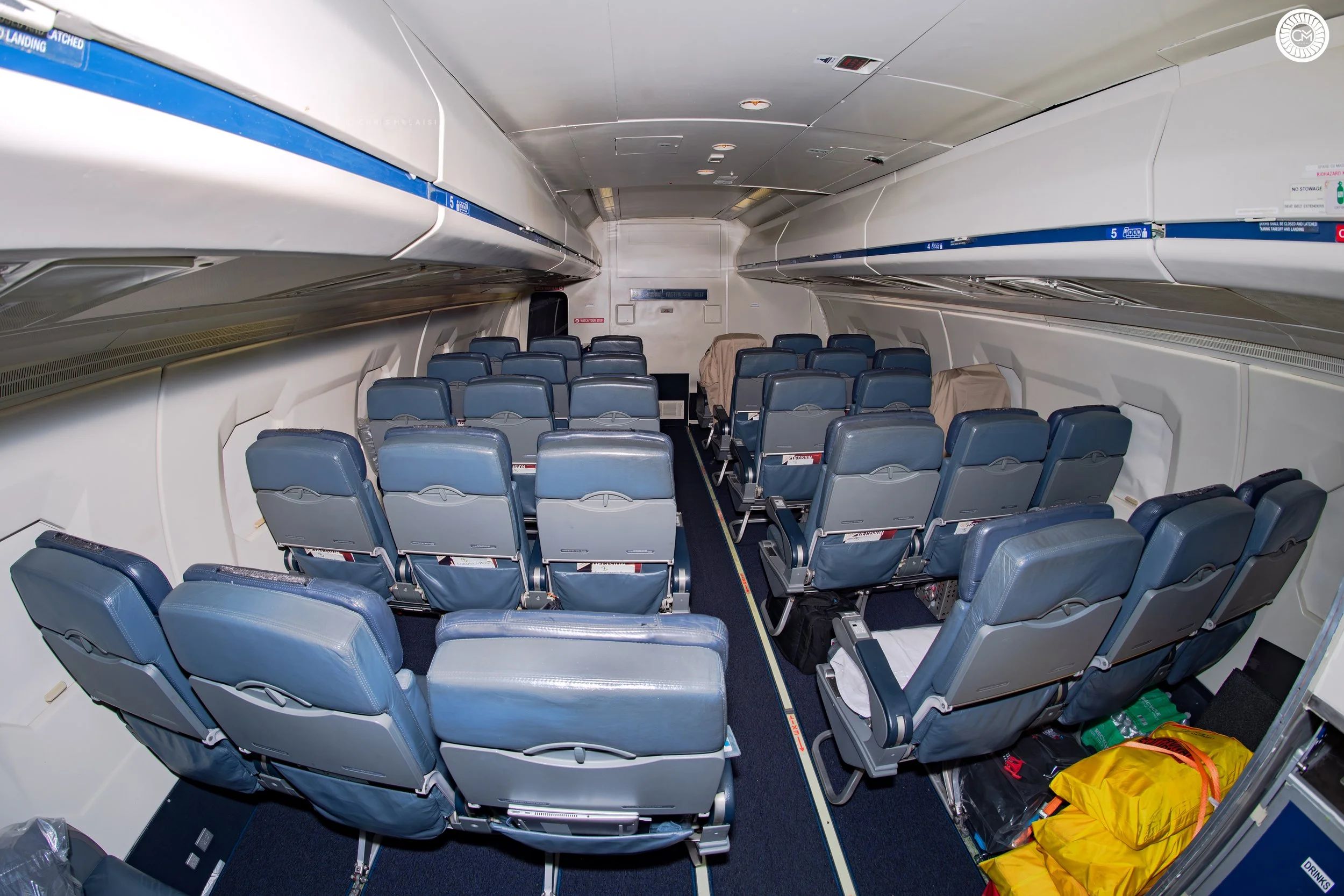
DC-8-72(CF) (c/n: 46013/427) N782SP, originally rolled off the Douglas final assembly line on 24/12/1968 as a DC-8-62CF (Convertible Freighter) and was delivered to Finnair in 1969. After several years, the aircraft was bought by the French Air Force in 1981 and converted to a DC-8-72(CF), when its Pratt & Whitney JT3D-3B engines were replaced with more powerful and fuel- efficient CFM International CFM56-2C. Air Transport International then purchased the aircraft in 2005, its large main-deck cargo door suited their operation. ATI further advanced the aircraft by converting it to a combi, allowing space for up to 10 freight pallets and 32 seated passengers in a 3-3 configuration at the rear of the aircraft. It saw another stint of successful flying from Ohio, USA before retirement in 2013. Samaritan’s Purse saved the aircraft from an uncertain future and purchased the DC-8 in 2015. After considerable financial and technical investment to comply with U.S. FAA and international regulations, the aircraft was re-registered N782SP and returned to the air. This marked the beginning of heavy-lift global disaster response operations out of the charities Greensboro aviation base at the Piedmont Triad International Airport (KGSO/GSO).
The Samaritan’s Purse DC-8-72(CF) is a combi freighter, allowing room for 32 seats at the rear of the aircraft. The main cargo bay is located through the small entrance on the left side.
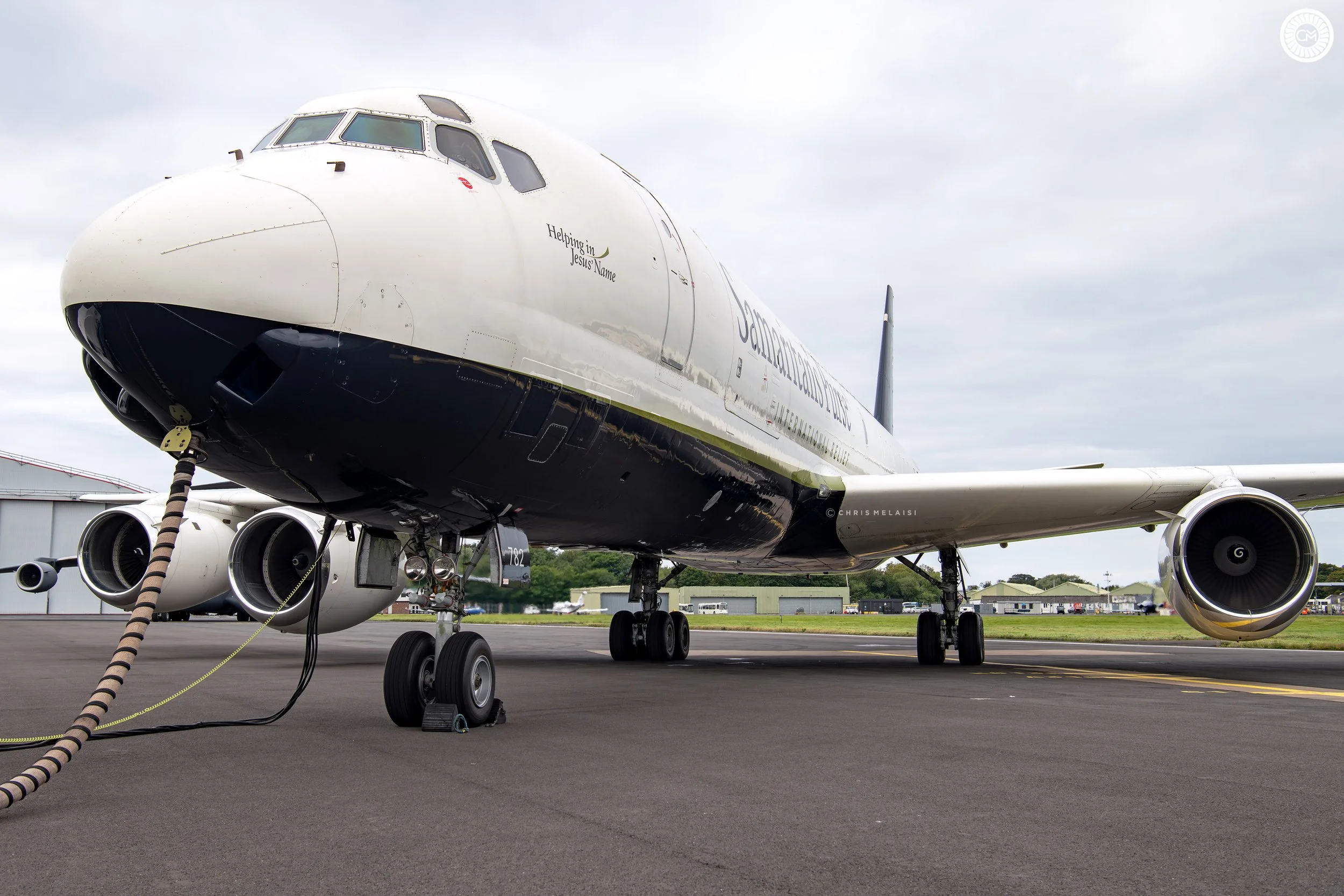
The mighty DC-8 is seen on startup at Prestwick International Airport in August 2025. The aircraft was returning to the USA after an aid flight to the Middle East. Note the Air Start Unit connected to the DC-8’s very unique nose, which features intakes.
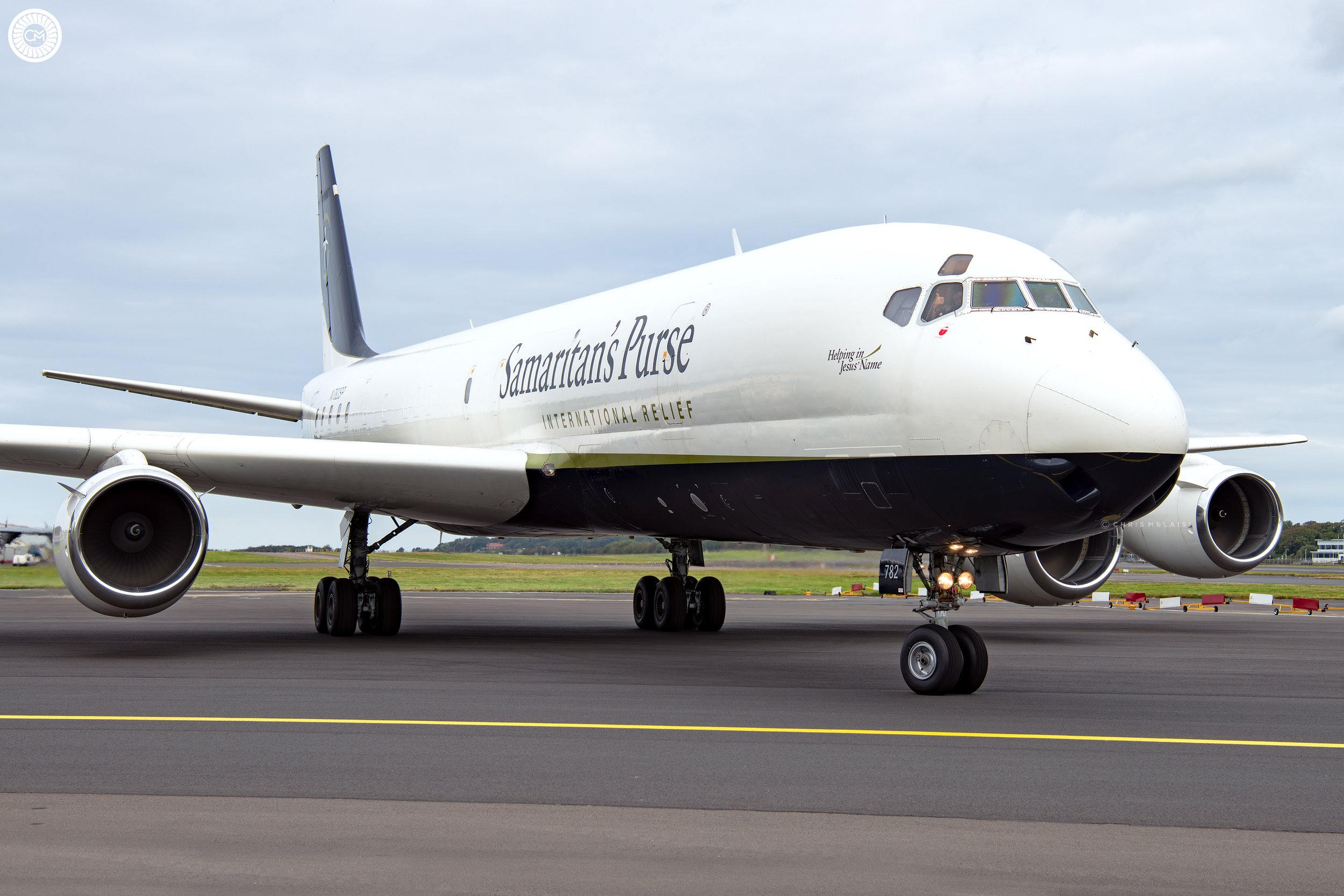
Thumbs up from pilot Andy Klischer as the crew take NSP8 to the active for departure. The DC-8 was returning home after an aid mission in the Middle East.
A well-seasoned crew
The organisation’s pilot and director of operations Andy Klischer discussed flying the DC-8 and, together with engineer Joe Proffitt, told Aviation News about some memorable missions. During his career, Andy has totalled more than 20,000 flying hours, flying an array of different aircraft including L1011s and 747s, although the first jet he flew was a DC-8. Andy was a flight engineer, a first officer and captain on the type, and also a mechanic. His first aviation job overseas was as a DC-8 line mechanic, followed by a DC-8 jet engine specialist before moving onto roles in the cockpit. He said: “I spent my career flying various types and by chance stumbled across the tail of N782SP sticking out of the hangar at Greensboro. Being such a unique and special aircraft to me, I had to go for a look and that’s when I was introduced to Samaritan’s Purse and their operation. Before long I was a captain here, back flying the mighty DC-8 and then I quickly became the director of operations and have been part of the operation for over five years.” Joe was in the air force for 26 years, during which time he was a flight engineer. He was then hired by Airborne Express, which at that time had 36 DC-8s. Joe flew the DC-8 as an engineer and later trained flight engineers on the panel in the simulator in Wilmington, Ohio. This DC-8 simulator is now the last in the world and the world’s current and last DC-8 operators from South America and Africa still bring their crews here for training. The DC-8 was eventually phased out, and Joe became a 757/767 ground school instructor. He said: “During that time I was still able to work in the DC-8 simulator, training crews from other companies.” He then did some work for NASA: “I became a contract flight engineer for seven years, flying on their DC-8 research aircraft on several missions. I continued my simulator work and eventually crossed paths with Samaritan’s Purse.” Joe was delighted to have the opportunity to fly the organisation’s DC-8, adding: “This is where I will end my flying career.” Andy continued: ‘It’s a humbling aeroplane – I’ve flown lots of different aircraft over my career and not many bring you back down to earth like this one. It’s a serious aircraft to fly but that’s part of the reason I like it. “The DC-8 is the backbone of Samaritan’s Purse, it is very near and dear to my heart and I’ve spent a lot of my career with them. Being able to fly in a three- man cockpit in 2025, alongside such professionals and DC-8 experts like Joe, is great. I can ask any questions and have no worries. It’s been a blessing to fly alongside some of the most seasoned professionals out there; with over 120 years of experience between us in the cockpit, we are well adapted and positioned for any mission.” Known within the ministry as the ‘mighty’ DC-8, Andy continues; We feel God has led us here to follow this path, flying the mighty DC-8 to provide help and support to millions around the world. I mean it when I say it’s the ‘mighty’ DC-8. Never did I imagine flying halfway around the world to perform what are sometimes near impossible missions, flying into natural disaster or war-torn areas. People would never, in their lives plan to go to the places we have taken ‘The Eight’ but we’re there, getting the job done in Jesus’ Name and with a platform which has been exceptional. It will be a sad day when the aircraft retires but I’ve enjoyed every moment.’
The Samaritan’s Purse DC-8 has been involved in many memorable missions over the past decade, Joe described aid missions to Ukraine between 2022-2023. Samaritan’s Purse transported emergency field hospitals, medical and other disaster relief specialists; it cared for more than 21,000 patients and provided more than 245m pounds of food and water. Joe said: “We performed 42 airlift missions to war-torn Ukraine. On ten of those missions, we brought refugees back on the DC-8 to Canada, women and children who may not see their husbands and fathers again. Missions like this really put into perspective about why we’re helping and doing what we do.” Two more notable missions out of hundreds of equally important airlifts include a deployment to Ethiopia in 2021. Samaritan’s Purse airlifted more than 120 tons of critical relief supplies on four DC-8 flights to northern Ethiopia after months of internal conflict left millions of families without access to necessities. In 2023, Samaritan’s Purse delivered more than 53 tons of critical aid aboard the DC-8 to support around 100,000 ethnic Armenians who fled their homes in Nagorno-Karabakh. Samaritan’s Purse doctors, nurses, and physical therapists also treated burn victims with severe injuries from a gas explosion.
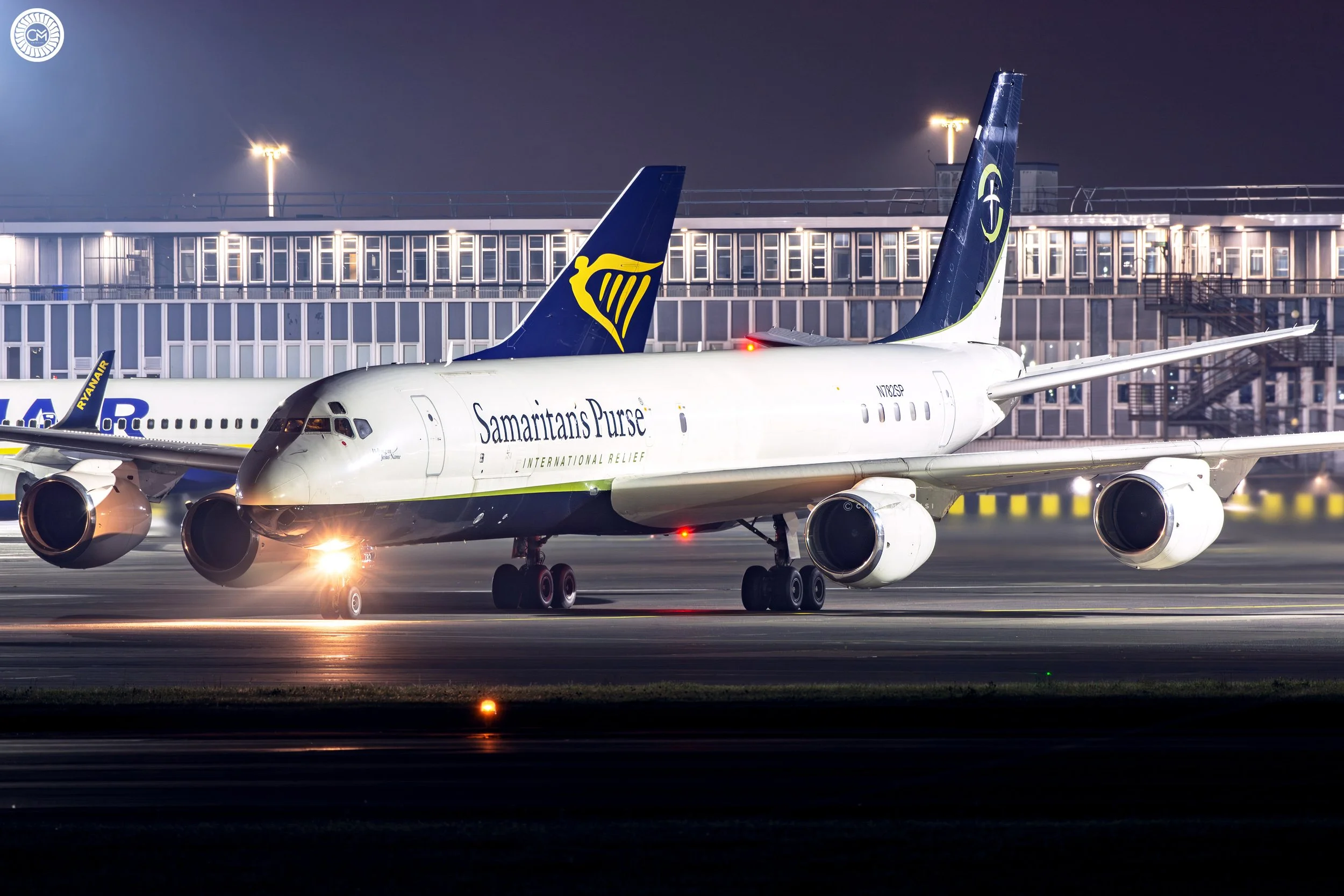
Seen departing at 1AM local time, ‘NSP8’ performed quick turnaround in Scotland in August 2020. The crew were urgently responding to a crisis in Beirut, Lebanon, where a major explosion occurred, effecting thousands.
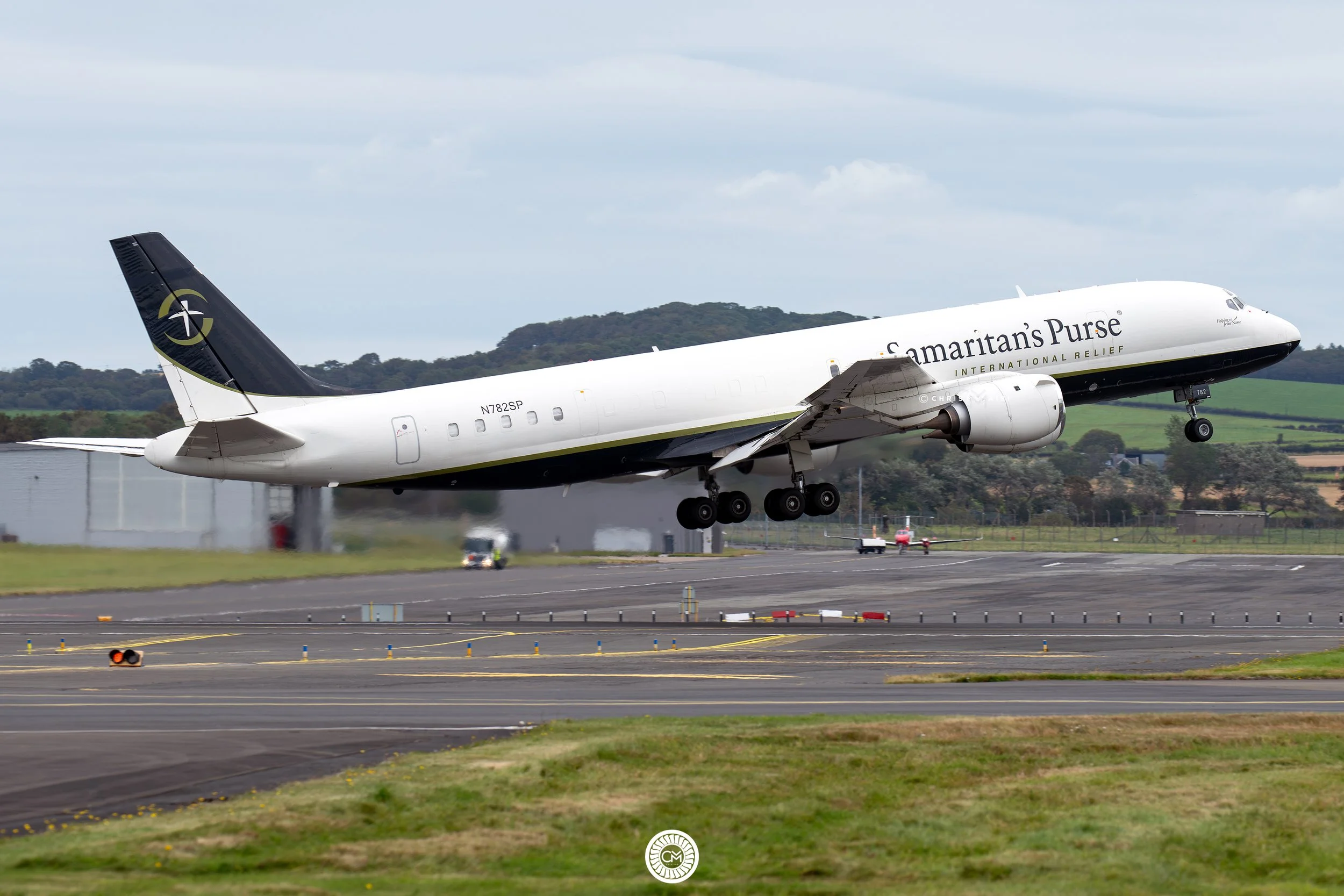
A DC-8 departing the UK, for what will likely be the very last time. Here, the Samaritan’s Purse DC-8-72(CF) lifts from Prestwick’s runway 12 as ‘NSP8’ during August 2025.
On-going response:
Recently, the DC-8 has flown as part of Samaritan’s Purse’ ongoing response to the conflict in Gaza. Food and aid have been provided to the people of Gaza and as of October the 2nd, 2025, Samaritan’s Purse had distributed one million Ready-to-Use Supplementary Food packets (RUSF) to hungry women and children. 12 relief flights enabled Samaritan’s Purse to carry over 202 MT of these life-saving rations to the region. Alongside food distribution, Samaritan’s Purse medical teams have also been providing urgent first aid to those arriving on-site in need, treating more than 1,400 patients (including recurring patients) to date. The organisation’s response has been to civilians on both sides of the conflict in Israel and Gaza since October 7th, 2023, and they anticipate being able to do more for these people in the future.
Jim Vechery shares his thoughts on the ‘Mighty’ DC-8 ahead of its retirement in December 2025:
‘The first mission with our DC-8 was April 20th, 2016, which involved a response to Ecuador where our people transported an emergency field hospital after a devastating 7.8 magnitude earthquake. Purchasing the DC-8 was a ‘game changer’ for the ministry, enabling us to provide relief supplies on a large-scale capacity at short notice, anywhere in the world. In the almost 10 years of operating the aircraft, it’s flown 210 missions and delivered over 9.5 million pounds of cargo to various worldwide locations. It has performed incredibly and has been very reliable despite its age. For example, last year we performed four missions in seven days to the Caribbean and after each mission there was rarely one fault or issue noted. The more the DC-8 fly’s, the better it gets! - but unfortunately due to a lack of spares being available and the vulnerability of the aircraft, it’s time to modernize the fleet. Our heavy-lift aircraft sport the title ‘Helping in Jesus’ Name’ on the outside, beside the cockpit. No matter where we show up, people know who we are representing and what our job is, and we are very proud of that. Our DC-8 has performed amazingly and we will continue to enjoy it in the final months of flying and providing aid to those who need it most.’
Douglas DC-8-72(CF) N782SP is due to be retired at the end of December 2025, marking the end of American registered DC-8’s and the world’s last 72 series model. Samaritan’s Purse’ Boeing 767-300F N367SP will take over as the lead heavy-lift international crisis response aircraft from 2026 and will continue to aid millions around the world.
On the 7th December, 2025, the aircraft flew for the final time, when it was delivered to the Liberty University in Lynchburg, VA. The aircraft will become a museum to highlight mission aviation for generations to come.