Scotland’s ‘Super Shed’
Once the staple of regional carriers across the UK, the box-like Short 360 is now largely confined to express parcel and airmail duties in the USA and Central America. Chris Melaisi recounts a jumpseat ride in one of the last remaining examples in Europe for a nocturnal mission across Scotland.
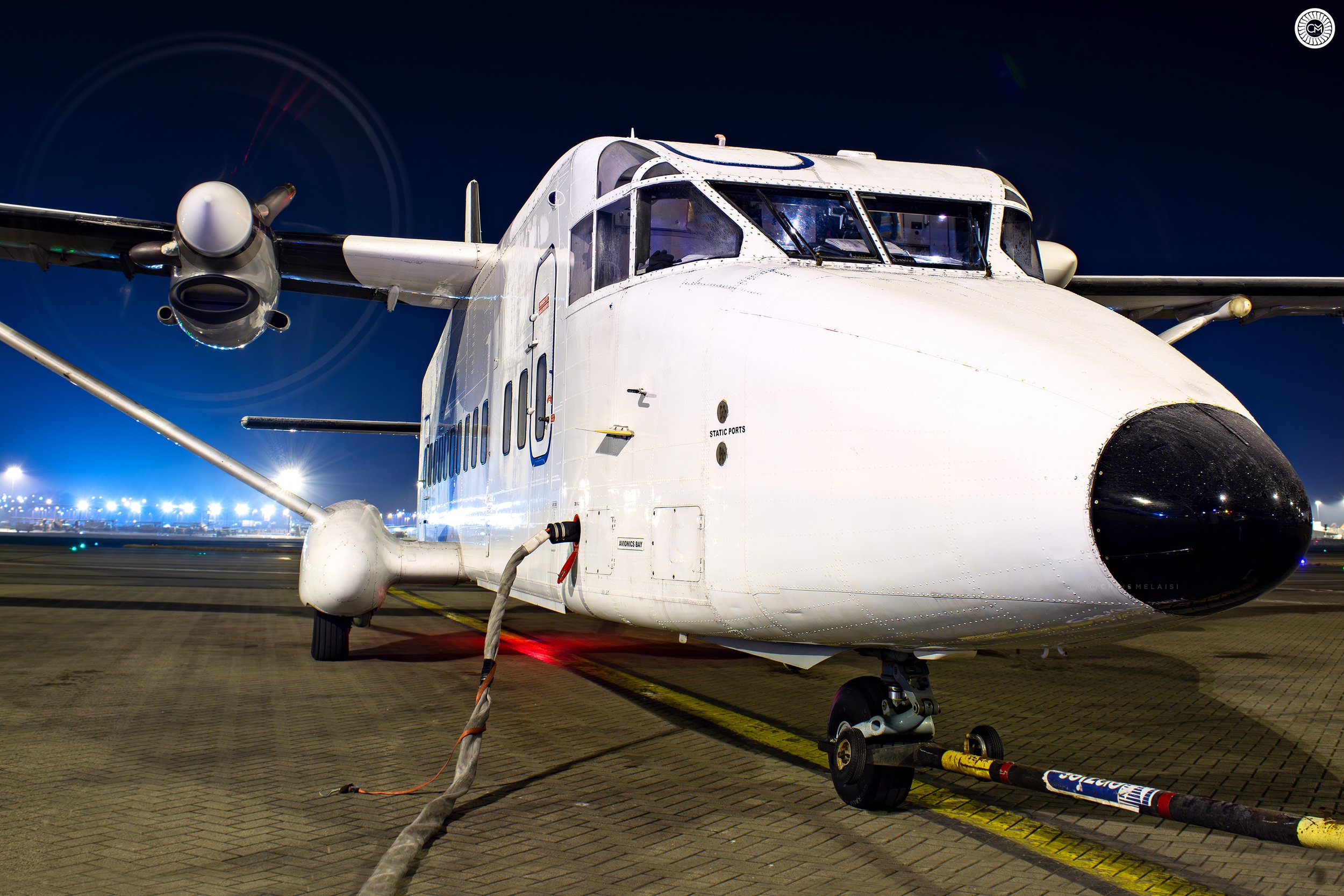
It may not win any beauty contests, but the twin-tailed Short 330 and its bigger stablemate, the 360, revolutionised the regional aviation market during the 1970s and 80s with their unprecedented comfort and space. The aircraft family, derived from the Northern Ireland-based manufacturer’s successful SC.7 Skyvan utility transport, is instantly recognisable by its braced, high-set wing, its podded main undercarriage and its ungainly box-like fuselage. In fact, its unappealing lines led to the universal nickname ‘the Shed’ for the 330 and ‘the Super Shed’ for the stretched 360. The vulnerable type features a unpressurised cabin, limiting operations to below FL120 and lacks the speed and sophistication of more modern competitors - but throughout the past 5 decades, its proven itself to be a rugged, inexpensive 30-36-seat airliner and more recently, a short range, reliable freighter.
Last of the Many
The Pratt & Whitney Canada PT6A-65R-powered Short 360 made its maiden flight on June 1, 1981 (seven years after the smaller 330), with 165 examples rolling off the Belfast assembly line during a decade-long production run. The type eventually gave way to a new generation of larger, advanced turboprops such as the ATR 42, de Havilland Canada Dash 8 and Saab 340. Today, barely 20 aircraft are believed to remain in active service, almost all of which are based in the USA and Central America. One of the last European operators of the type was Benair of Denmark, which flew a three-strong fleet of Short SD3-360-300 freighters on scheduled and charter services across the Continent.
Express Delivery
Two of Benair’s Short 360 spent many years flying within Scotland, based out of Inverness. The contract, which started in 2006, saw the turboprops operating multi-stop services across Scotland on behalf of Royal Mail, typically routing via Aberdeen to the sizeable hub at Edinburgh. Here, their load of parcels and letters would be transferred to other aircraft or waiting trucks for onward carriage to sorting offices across the country. The flight would spend four hours on the ground in the capital awaiting its next cargo load to arrive from the South of the UK via Boeing 737, once transferred and loaded, the aircraft could depart North, back to Inverness. Typically, the crew would operate from 1900-0400L, into 3 different location’s, 5 nights a week. This arrangement sadly drew to a close in February 2017, when Benair lost the contract to Scottish regional carrier Loganair and its more modern Saab 340F, prompting the Danish carrier to ferry its Short 360’s back to its Stauning - Vestjylland base, where they still remain today (2025).
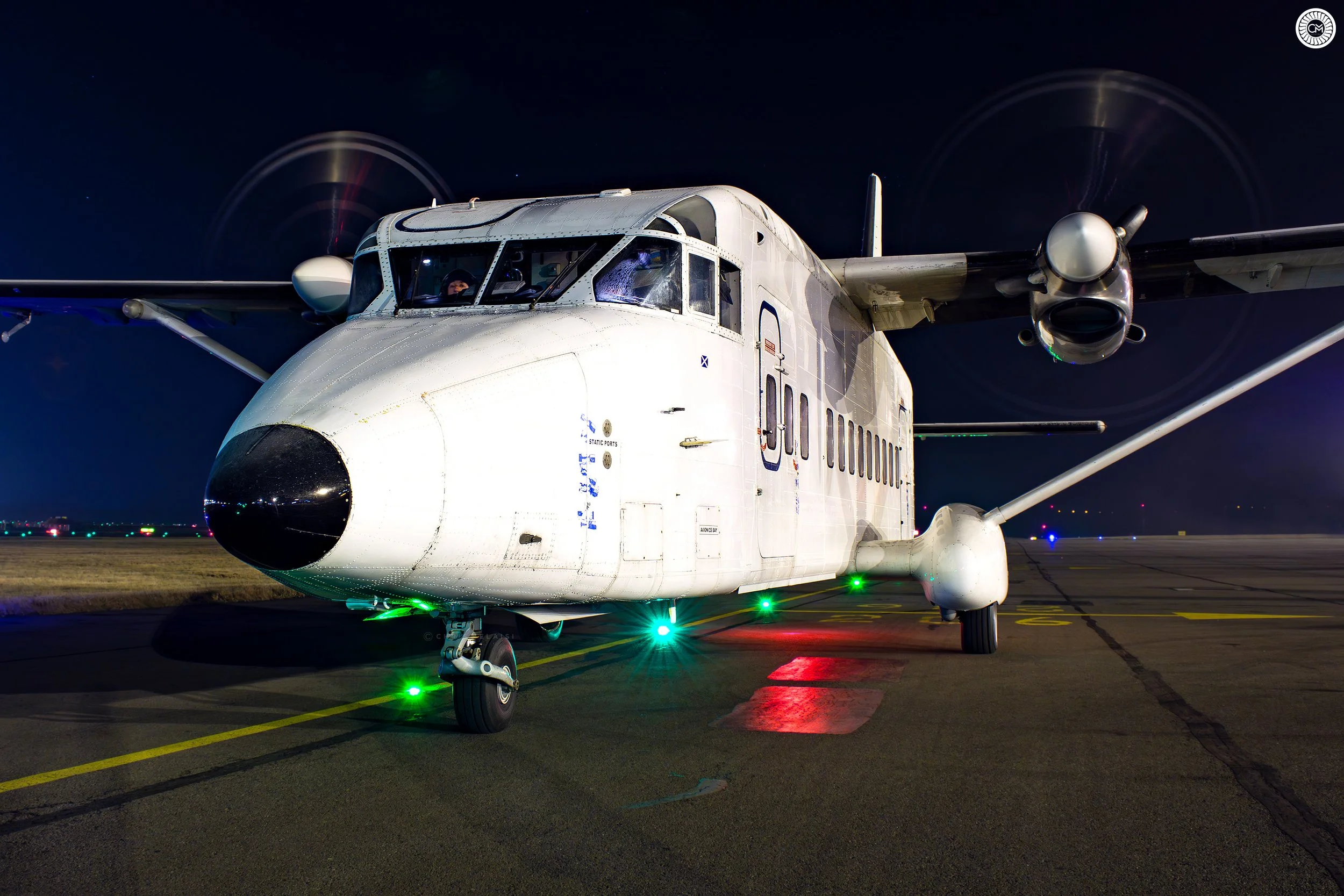
‘‘BIRDIE 29C’’ is seen running on taxiway Papa, having just been pushed back from its stand. The crew are about to taxi and complete the final leg of the evening’s flights.
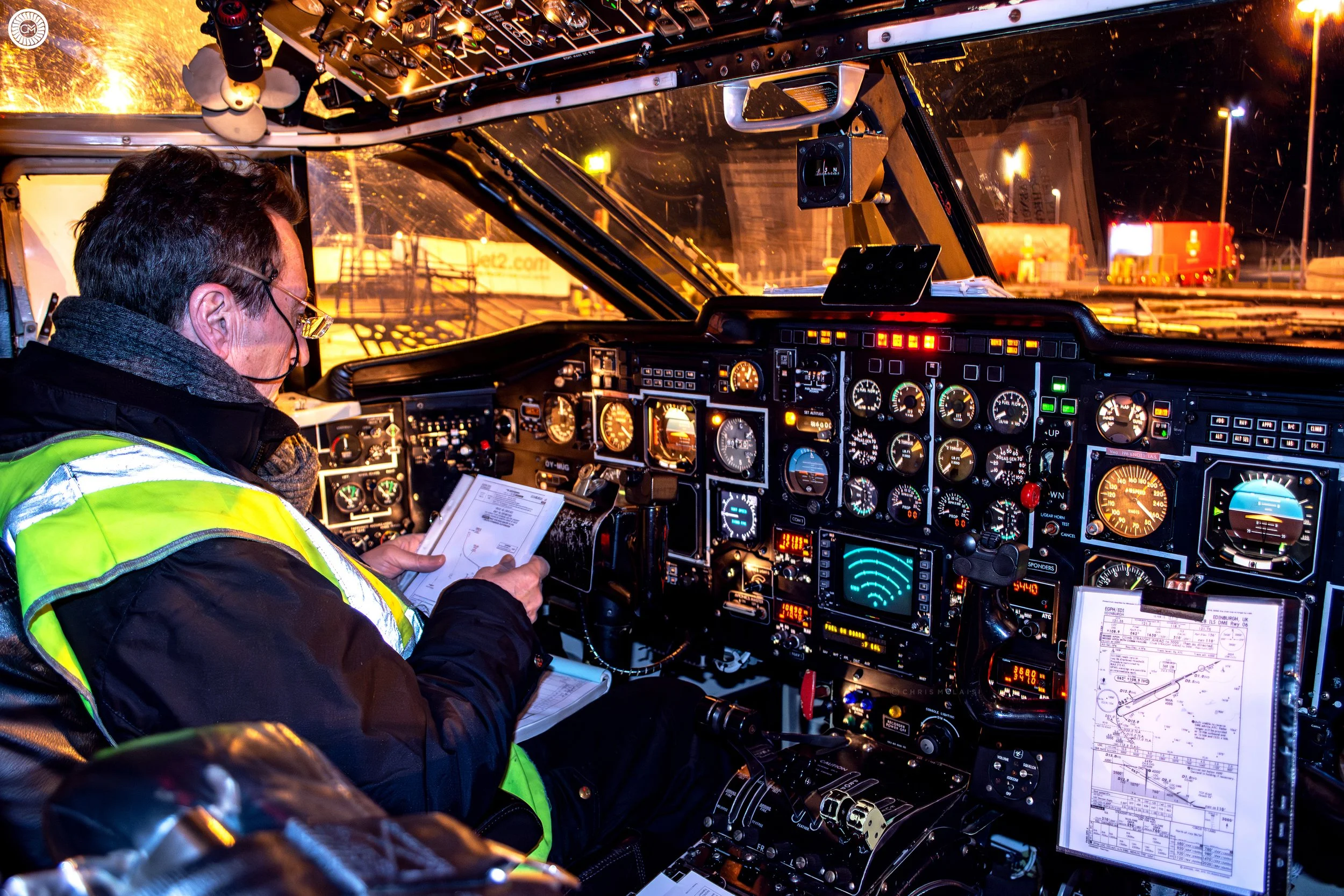
Short 360 pilot is seen running through departure charts ahead of our 02:30 departure.
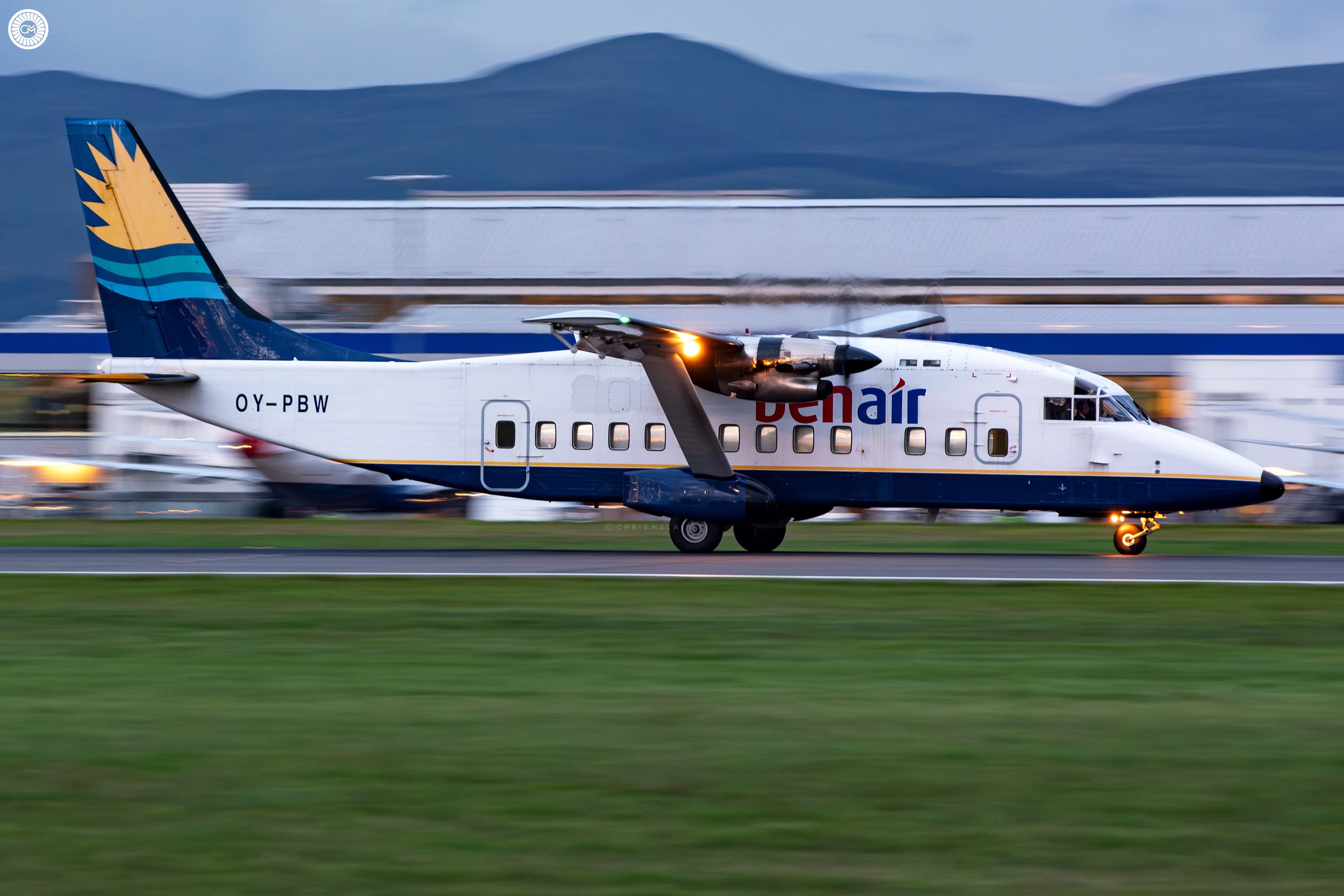
Benair’s second Scottish based Short 360-300 ‘OY-PBW’ is seen arriving at Edinburgh at approx. 2200L on a Summer evening.
Next Stop: Inverness
During the final months of Short 360 flying in Scotland, I was lucky enough to experience the ‘Super Shed’ first hand, initially on the ramp at Edinburgh during a turn-around, before joining a scheduled Royal Mail service to Inverness in January 2017. Our aircraft for the nocturnal flight was Short 360-300 OY-MUG (c/n SH3716), which joined the Benair fleet in 2005 after being originally delivered to Leeds-based Capital Airlines in March 1988 as G-BNDM.
After the main cabin was loaded with that evening’s cargo, I took my place in the jumpseat – situated behind and to the left of the captain’s position. I was immediately struck by the size of the cockpit, which is impressively spacious for regional commuter aircraft – the box-like Short 360 does not feature the same fuselage tapering as other types, consequently the flightdeck is as wide as the main cabin, which can comfortably accommodate three-abreast seating in passenger-configured examples.
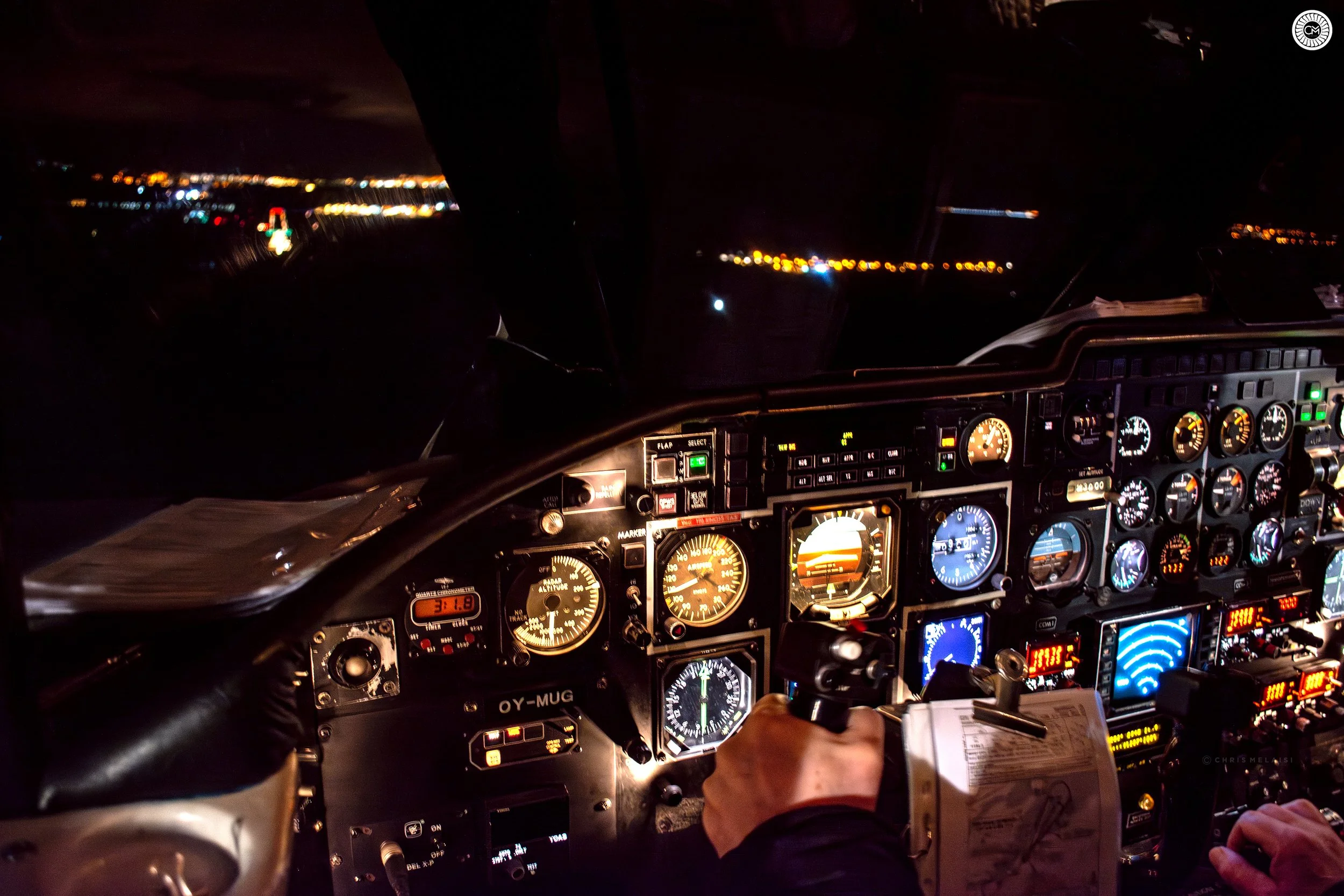
Pre-flight checks were carried out, revealing a minor snag with the aircraft’s autopilot. Fortunately, it wasn’t severe enough to ground the aircraft and, with the weather forecast looking favourable (Light winds with a thin layer of cloud)– the crew elected to manually fly the turboprop for the one-hour trip North. On this freezing January evening, the winds were blowing straight off the North Sea at around 10kts, causing the -5°C air temperature to feel significantly colder. Winter conditions in Scotland can persist through to April and be fairly harsh. Long dark nights, freezing temperatures and a lack of cabin heating in the Short 360 make hats, gloves, scarves and flasks of hot beverages essential for those on board. With all instruments in the ‘green’ after engine start, the crew worked through their pre taxi checks before flight BDI29C (callsign ‘Birdie 29 Charlie’), made the long taxi from Edinburgh’s cargo ramp down to Runway 06. Our initial routing was the GRICE 4D standard instrument departure (SID) so, after lifting off around 02:30am local, we kinked left by 15° to take up a heading of 044° and climbed out over the Firth of Forth, before swinging around to the North on a direct track towards Inverness. The cloud layer was slightly thicker than predicted but the Short 360 does not complain, showing itself to be a sturdy platform even when being hand flown. Its two 1,424shp PT6A engines – favoured for their reliability – are remarkably quiet when married with the -300 variant’s six-blade constantspeed Hartzell propellers, and deliver ample power, even with an almost full payload. We continued the climb up to our assigned altitude of FL080 (8,000ft) and then settled into the cruise. Checks were carried out continuously and, while the aircraft was performing well, the biggest area of concern was the potential for ice to build up on the leading edge of the wings and in the engine air intakes. Such a phenomenon can be fatal – the investigation into the crash of a Loganair-operated Short 360 shortly after departure from Edinburgh in February 2001 identified the cause as ice deposits inside both engines. In this instance, the crew shone torches out of the cockpit windows onto each of the wings, a rather rudimentary approach but one that confirmed the airframe was free of ice and revealed nothing else untoward. Cruising over Scotland during the early hours of the morning can be a rather tranquil experience and gave me time to chat with the crew about the quirks of operating the venerable Short 360.
“It’s always a challenging experience due to the fact many [examples] have no autopilot,” the first officer remarked. “Landings can also be ‘sporting’, especially in blustery conditions where the aircraft acts like a sail and weathercocks in the wind, making it rather difficult to maintain the runway centreline.”
After around 35 minutes into the cruise, air traffic control requested we change frequencies to Inverness Approach, who directed us toward our destination. We were cleared for an an overhead join into a visual approach for Runway 23 (which conveniently saves a rather long taxi back to the apron). Touching down smoothly at 03:20am local time, BDI29C made its way to the cargo ramp on the northwest corner of the airfield. After the cargo was unloaded, all that remained was to disembark and put OY-MUG ‘to bed’, closing doors and panels and fitting intake covers and tags before leaving the ageing turboprop to rest for the day, ready to repeat the cycle once again that night.
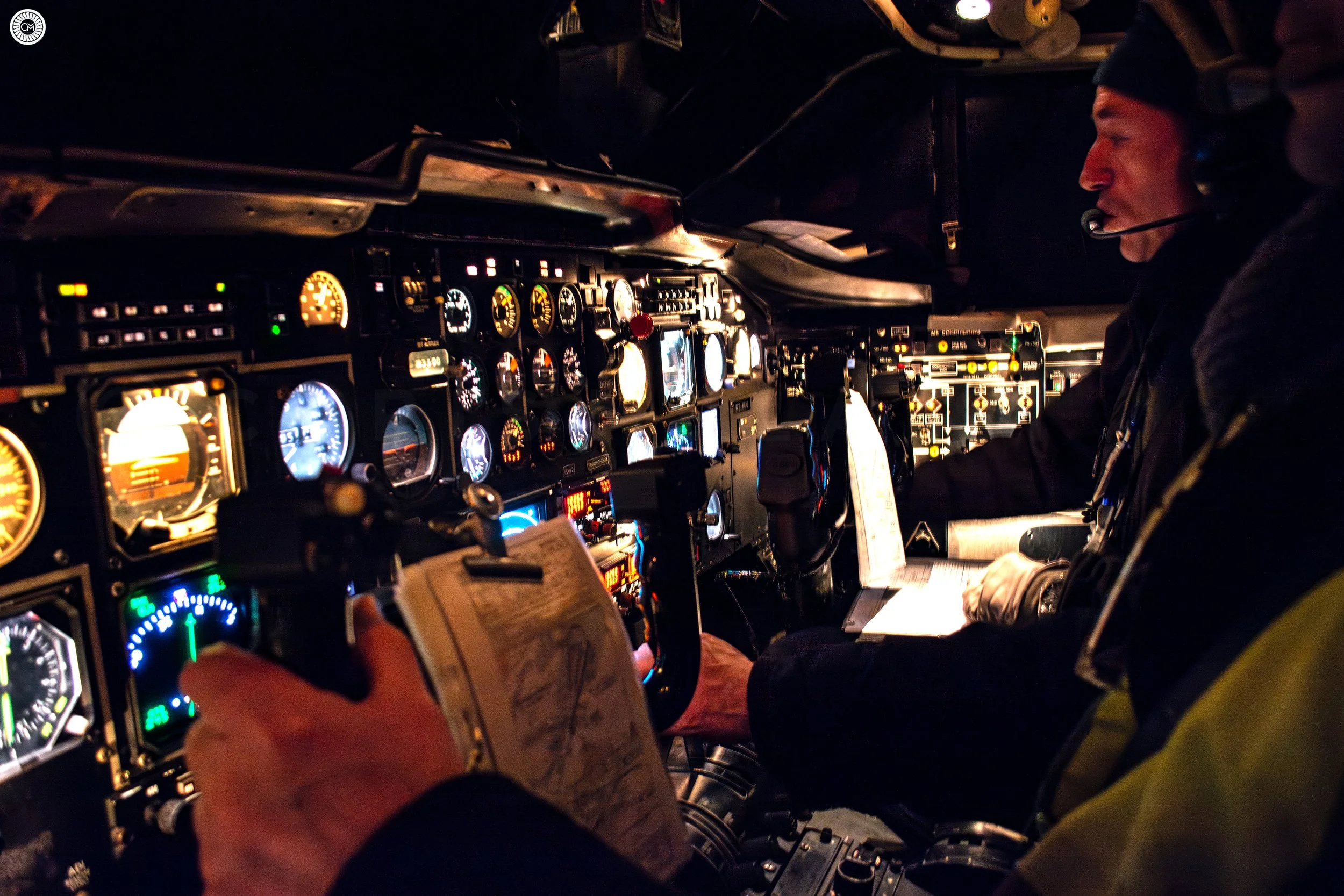
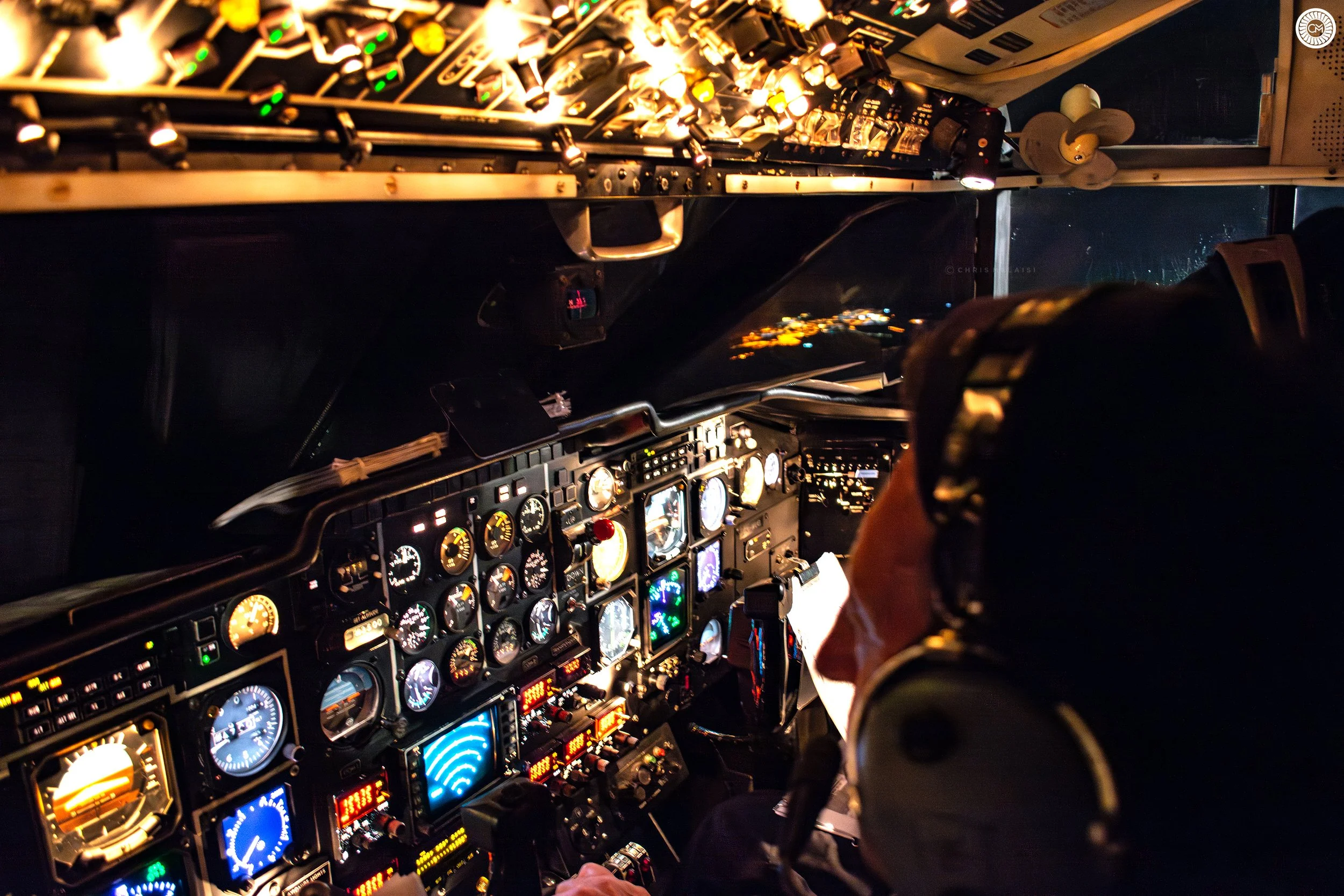
Manually flying on an icy January night in complete darkness over the Scottish highlands with only the instrument lights to provide a little warmth - pure and raw aviation.